


How Nagy Butchers Combines Tradition, Direct Sales, and Modern Production
The Nagy butcher shop sees itself as a classic full-range supplier, yet has a clearly recognizable specialization: the combination of Erzgebirge butchery tradition and Hungarian sausage and meat specialties.
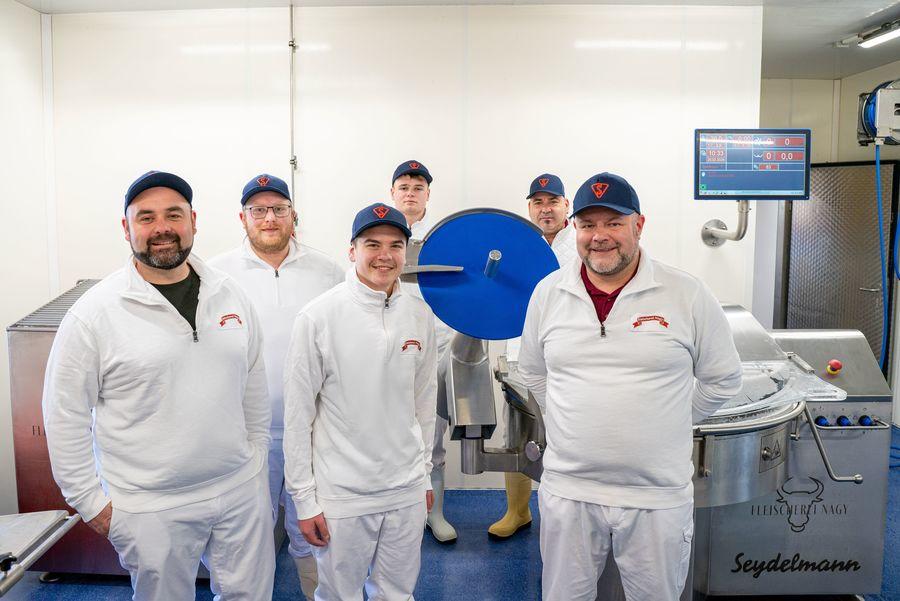
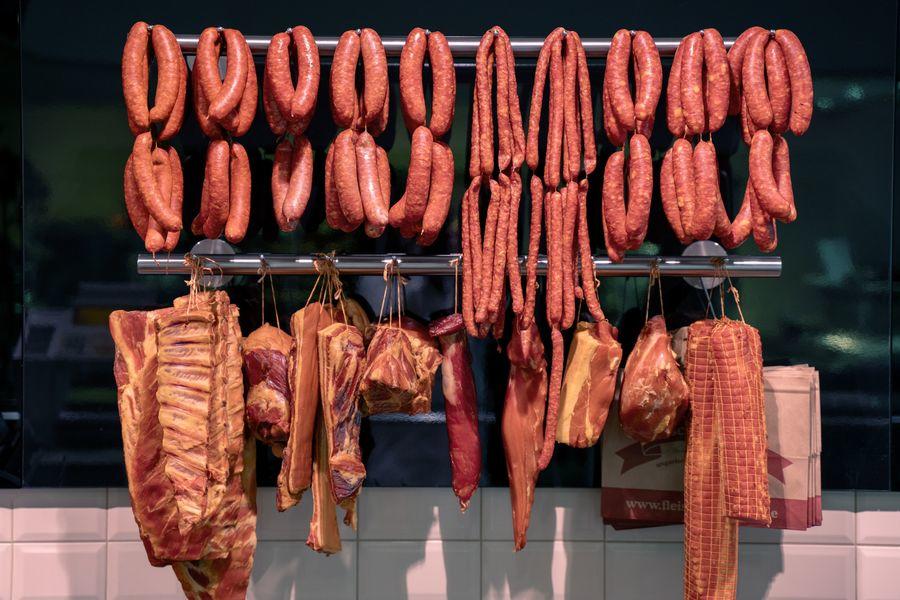
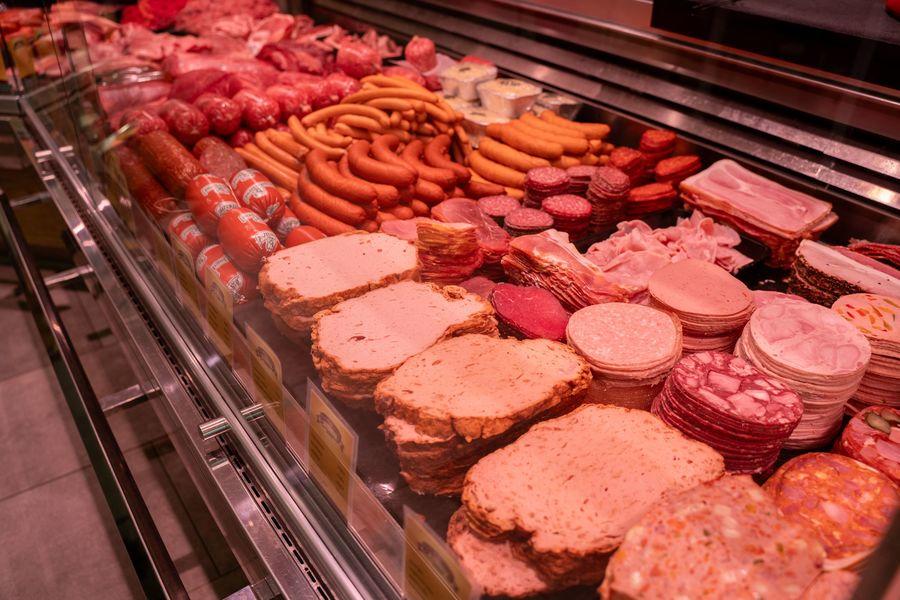
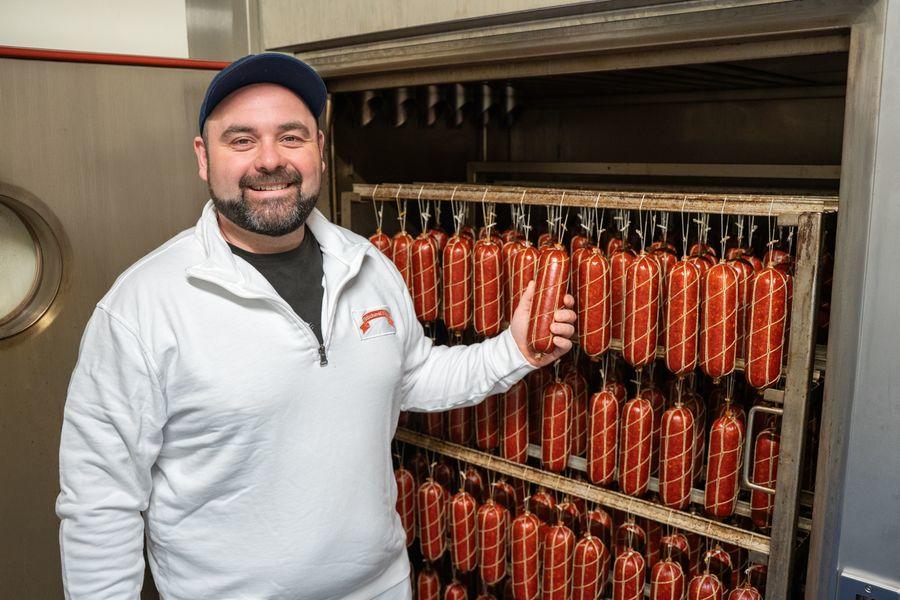
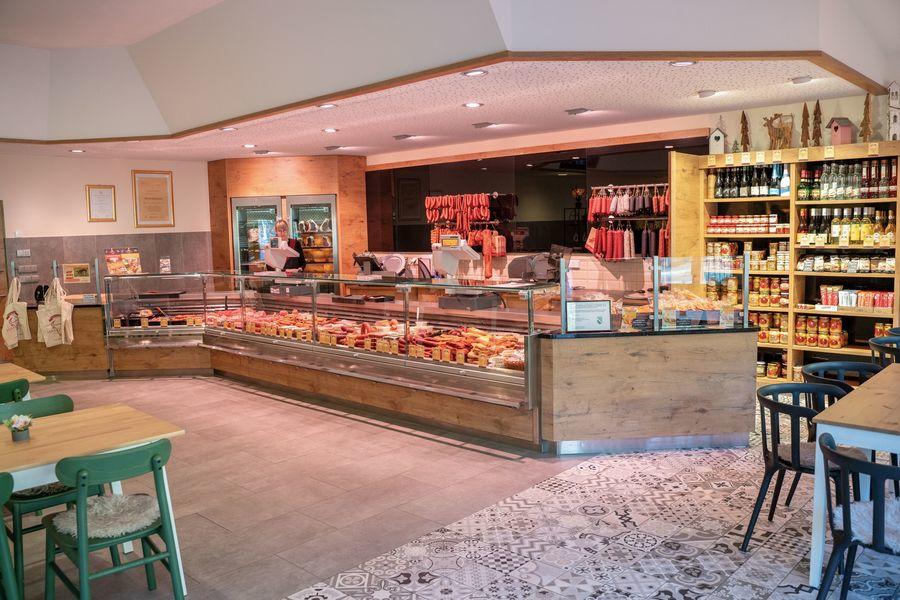
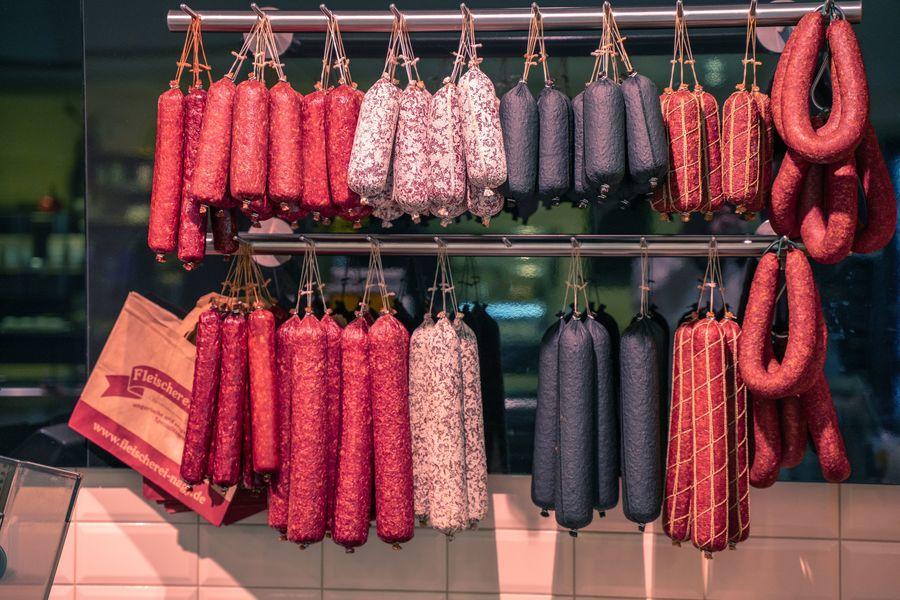
The story of Nagy Butcher Shop begins in an unusual way—not in a butcher shop, but in a tailor shop. The father of today’s entrepreneurial family was originally a men’s tailor—a craftsman, yes, but working in a completely different industry. His passion, however, lay in high-quality food, particularly the traditional Hungarian sausage and meat specialties from his homeland. This enthusiasm initially gave rise to a pure distribution model: he imported and sold such specialties, and in some cases had them produced by butcher friends.
Early on, however, the desire arose to have more influence over quality, recipes, and production. In 2000, the company first rented space in an existing butcher shop and began manufacturing its own products. The decisive step finally came in 2008: The family opened its own butcher shop with nine employees and a master butcher on staff. This marked the first time an independent artisanal production structure was established.
“My father isn’t a trained butcher, but he had an incredible knack for good products,” recalls András Nagy. “He always knows exactly what tastes good, what will sell well—and what doesn’t.”
A generational transition rooted in craftsmanship
Today, the business is run by András Nagy, who has been the sole managing director since 2026. His development is closely linked to the history of the company. He practically grew up in the shop and learned all aspects of the craft from the ground up.
In 2014, he successfully passed the master’s examination in the butchery trade. As a result, the business today combines the entrepreneurial experience of the first generation with the craftsmanship of the second. His parents remain part of the business and provide support, especially during busy periods.
“I grew up in the butcher shop. I didn’t just learn the trade—I experienced it every day,” Nagy says of his journey.
Gradual Expansion
Over the years, the business has been continuously expanded. Today, the facility covers a total area of approximately 580 square meters. About 200 square meters are dedicated to production, around 120 square meters to sales, while the remaining space comprises storage areas, cold rooms, aging rooms, and packaging areas.
Each week, the business processes an average of about five tons of meat—sourced exclusively from the region, from producers such as the SachsenGlück cooperative or partner farmers—into sausages, smoked specialties, and fresh meat displays. In total, the company employs about 30 people. Five of them work in production, five in the kitchen, three in the office, while the majority are active in sales and mobile distribution.
Modern Technology for Artisanal Production
To better handle production peaks while modernizing processes, the company recently invested in new technology. This includes a new grinder and a new cutter. “It was clear to me from the start that only two manufacturers were in the running: the one I already had, and Seydelmann,” explains András Nagy.
He took a very close look at both manufacturers and visited their respective production facilities. “It was very interesting to see the machines from a completely different perspective and to experience just how much actual craftsmanship goes into them. What fascinated me about Seydelmann was that almost everything comes from a single source - it’s not just assembled from supplier parts,” recalls Nagy. “And when you also have a technical advisor who comes from the butchery trade himself and with whom you can have an absolutely open and honest conversation on equal terms, that makes the decision-making process much easier.”
In addition to the robust build quality, the compact design played a key role, as a larger cutter also had to be integrated into the existing production space - meaning that instead of the previous 70-liter model, the new cutter needed to have a 120-liter bowl. Another decisive factor was the ability to set up an additional workstation with a direct connection to the cutter’s control system. This allows the recipe book to be managed digitally and ingredient quantities to be automatically adjusted to changing production volumes. On a display in the spice room, employees can view all relevant information and weigh the in-house blends instead of using pre-made standard seasonings.
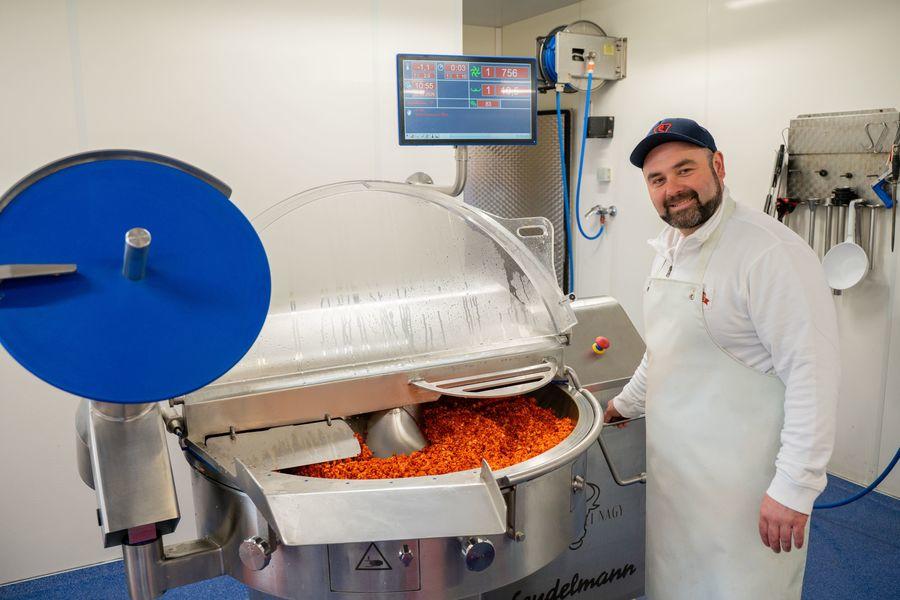
The choice fell on a Seydelmann K 120 AC-8 high-performance cutter with an S24 blade system and an AutoCommand 4000, a control system with recipe management. “The blade system makes changing the blades themselves or converting to a different blade configuration that better suits the respective product much easier and faster without having to rebalance the machine. The recipe control system enables fully automatic operation of the machine for all products. The second workstation in the spice warehouse eliminates the source of error associated with manual conversion and makes the paper-based spice book obsolete,” explains Nagy, detailing his decision.
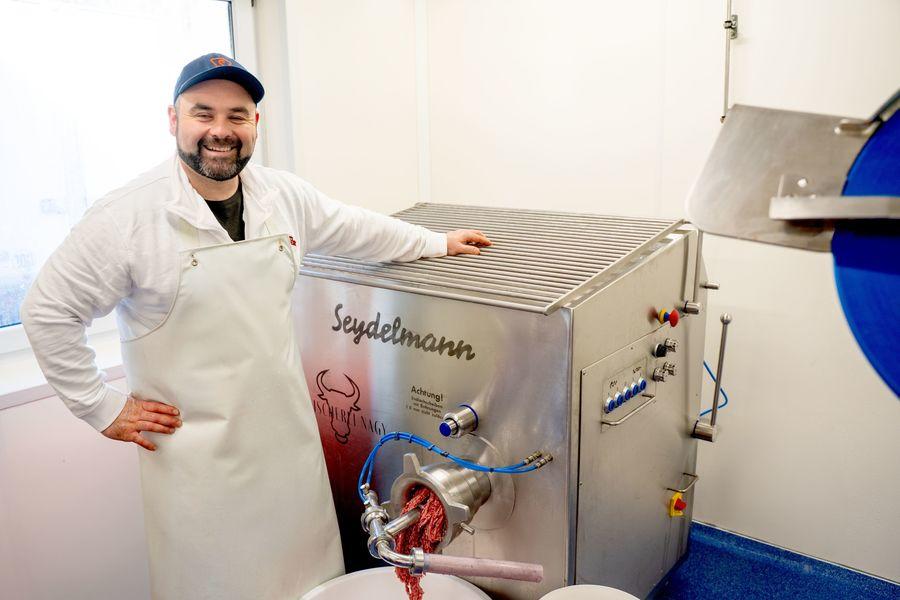
For the grinder, the choice fell on a Seydelmann AE 130 Automatic Grinder with a pneumatic separating set. “It’s just great to see how smoothly it operates and how cleanly the product comes out. The cutting unit sorts reliably, because even though we want to use every part of the animal, nobody wants tendons, cartilage, or bone fragments in their salami—not even in a Hungarian one,” says Nagy with a laugh. With its conical feeding worm, the AE 130 easily processes partially frozen meat, whole muscle cuts, and even small scraps. The low loading height is another plus.
“New technology isn’t just an investment for us,” says Nagy. “It also forces us to rethink our production, and that’s exactly what I want—not to cling to the status quo, but to keep developing myself, my employees, and the company.”
Full range with a distinct culinary signature
The Nagy butcher shop sees itself as a classic full-range supplier, yet has a clearly recognizable specialization: the combination of Erzgebirge butchery tradition and Hungarian sausage and meat specialties.
An important part of this culinary tradition is the philosophy of using every part of the animal, which is widespread in Hungary. As many parts of the animal as possible are processed and developed into unique specialties.
From this and other ingredients, products are created that are rarely found in everyday German butcher shops. One example is sausages containing rice, whose origins trace back to historical Mongolian influences in Hungarian cuisine.
“This cuisine is very honest,” says Nagy. “You use every part of the animal—and turn it into something delicious.”
Freshness as a Key Quality Factor
A fundamental principle of production is the uncompromising focus on freshness. The entire product range is made fresh daily to ensure consistently high quality.
In addition to technology, experience also plays a crucial role. “You need a feel for the product,” explains Nagy. “You can see, smell, and feel when a sausage or meat product is truly perfect.”
This sensory expertise is still considered one of the most important quality characteristics in the butchery trade.
Direct sales as a business strategy
The company also follows a clear approach to sales. Most products are sold through direct sales. Only a few specialty shops carry individual products from the butcher shop.
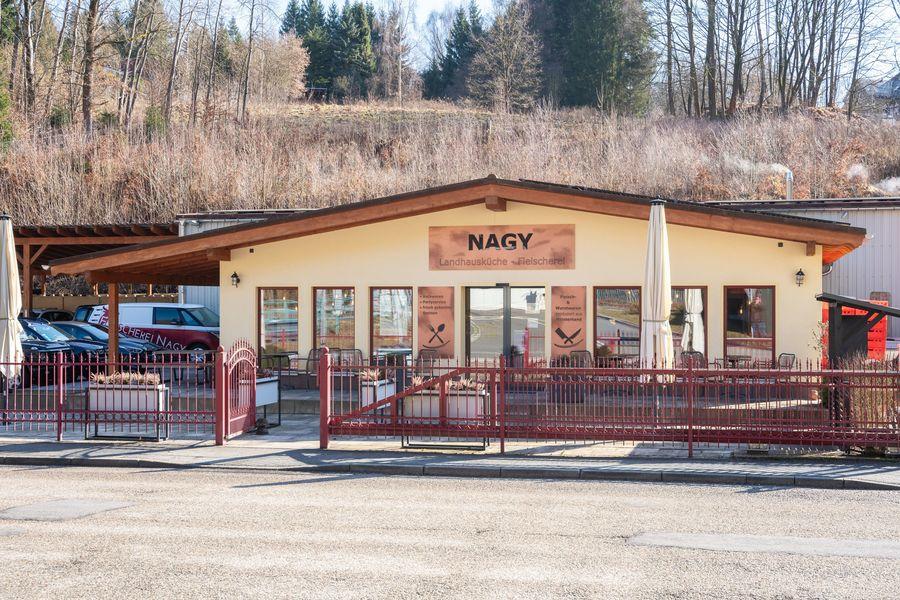
The main point of contact is the factory outlet at the location in Amtsberg-Dittersdorf, which is complemented by its own country-style kitchen.
In addition, the company operates a mobile sales service with four sales vehicles. One vehicle is permanently stationed in Chemnitz, while the others regularly visit towns and villages in the Erzgebirge within a radius of up to 100 kilometers.
“A special highlight every year is participating in the Chemnitz Christmas market. Here we offer not only hot bratwurst and Kolbász, but also take-home items. The various raw sausages are real bestsellers. My mother has been a familiar face there for decades and is always the best salesperson,” Nagy says with a laugh.
Another sales channel is online retail, which accounts for about five to ten percent of sales. Around 100 packages are shipped weekly, primarily containing specialties from the Erzgebirge and Hungary.
Premium meat and changing consumer behavior
High-quality meat specialties are also playing an increasingly important role in the product range. These include, for example, products made from Mangalica and Duroc pigs or Angus beef. The animals come from regional farms.
Nagy observes a significant shift in consumer behavior: “People are eating less meat than before, but they’re paying more attention to quality. The trend is clearly toward: quality first, price second.”
Catering as a second pillar
In addition to the butcher shop, retail, and shipping, another business segment has taken root. The butcher shop offers catering for events with up to 1,000 guests. The combination of in-house production, a kitchen, and logistical expertise enables a complete, one-stop service.
Focus on energy and employees
Like many artisanal food businesses, the Nagy butcher shop is also facing rising energy costs. An important measure for stabilizing costs is a 76 kWp photovoltaic system, which covers part of the business’s energy needs.
The business also takes a unique approach to staffing. Nagy deliberately focuses on the individual development of its employees. “We take a close look at each employee: What are their strengths? And then we try to build on exactly those skills.” Career changers are warmly welcomed.
An unusual but highly valued component of the employee program is an e-bike program available to all employees.
A Trade with a Future
The development of the Nagy butcher shop exemplifies how traditional butcher shops can hold their own in today’s market environment: with a clear product identity, consistent direct sales, modern technology, and a strong personal touch.
Or, as András Nagy puts it himself: “In the end, it’s always about respect - respect for the product, for the animal, and for the customer. If you take that seriously, artisanal butchery will continue to have its place in the future.”