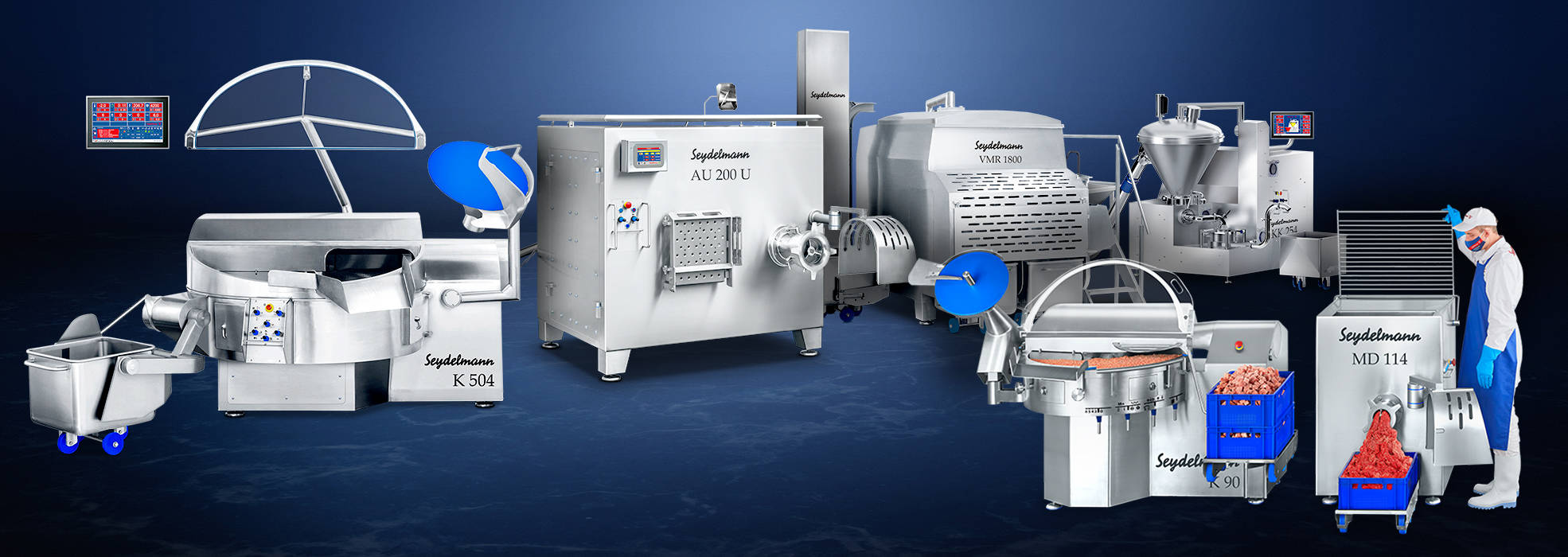
斩拌机

大功率斩拌机, 真空斩拌机, 烹饪斩拌机, 真空烹饪斩拌机, 台式斩拌机, 生香肠斩拌机 

绞肉机

标准型绞肉机, 自动绞肉机, 自动搅拌绞肉机, 搅拌绞肉机, 通用绞肉机, 冻肉绞肉机

搅拌机

搅拌机, 真空搅拌机,  搅拌绞肉一体机

乳化机

Konti-Kutter, 真空 Konti-Kutter

生产线

全自动生产线,半自动生产线,输送技术,暂存技术

Gold for the Seydelmann Customer Center

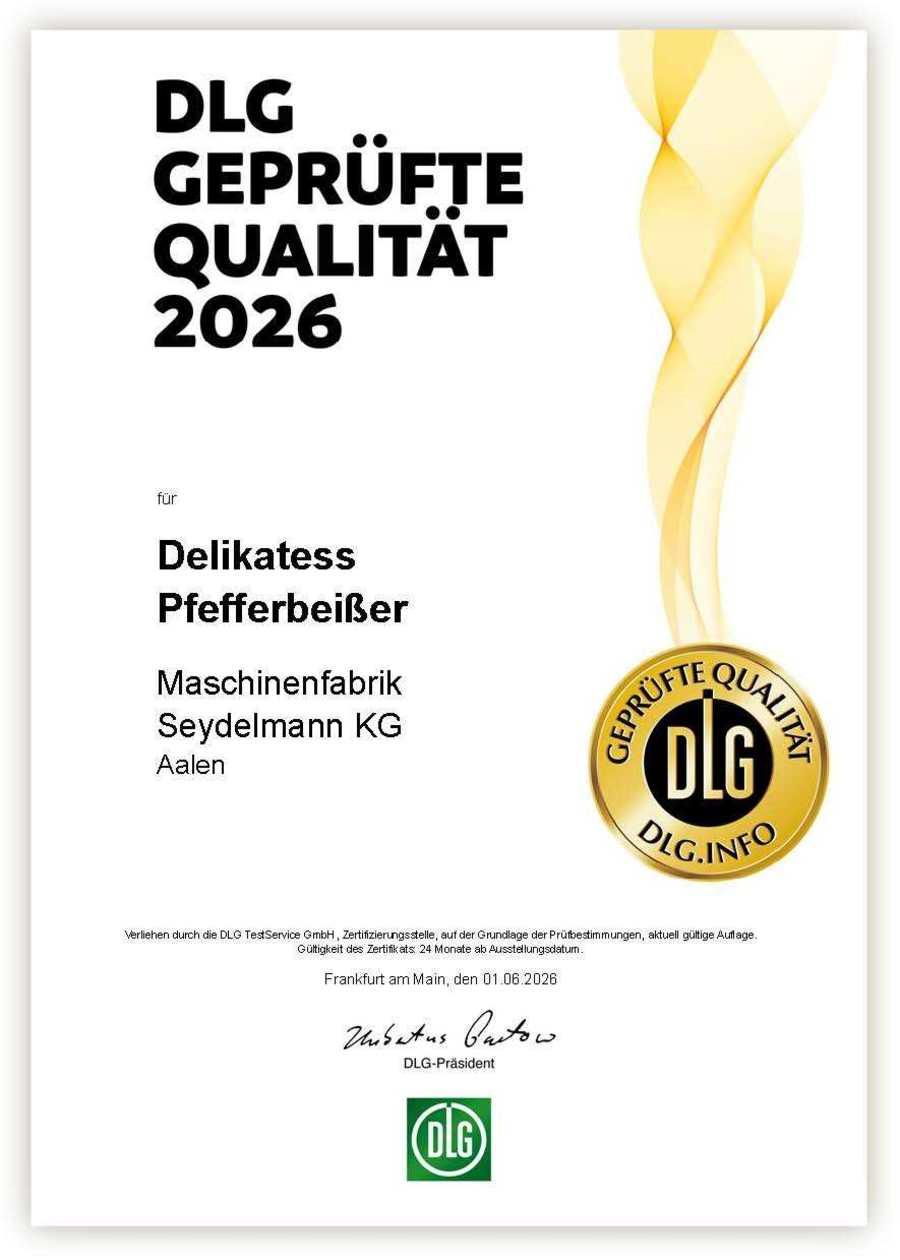
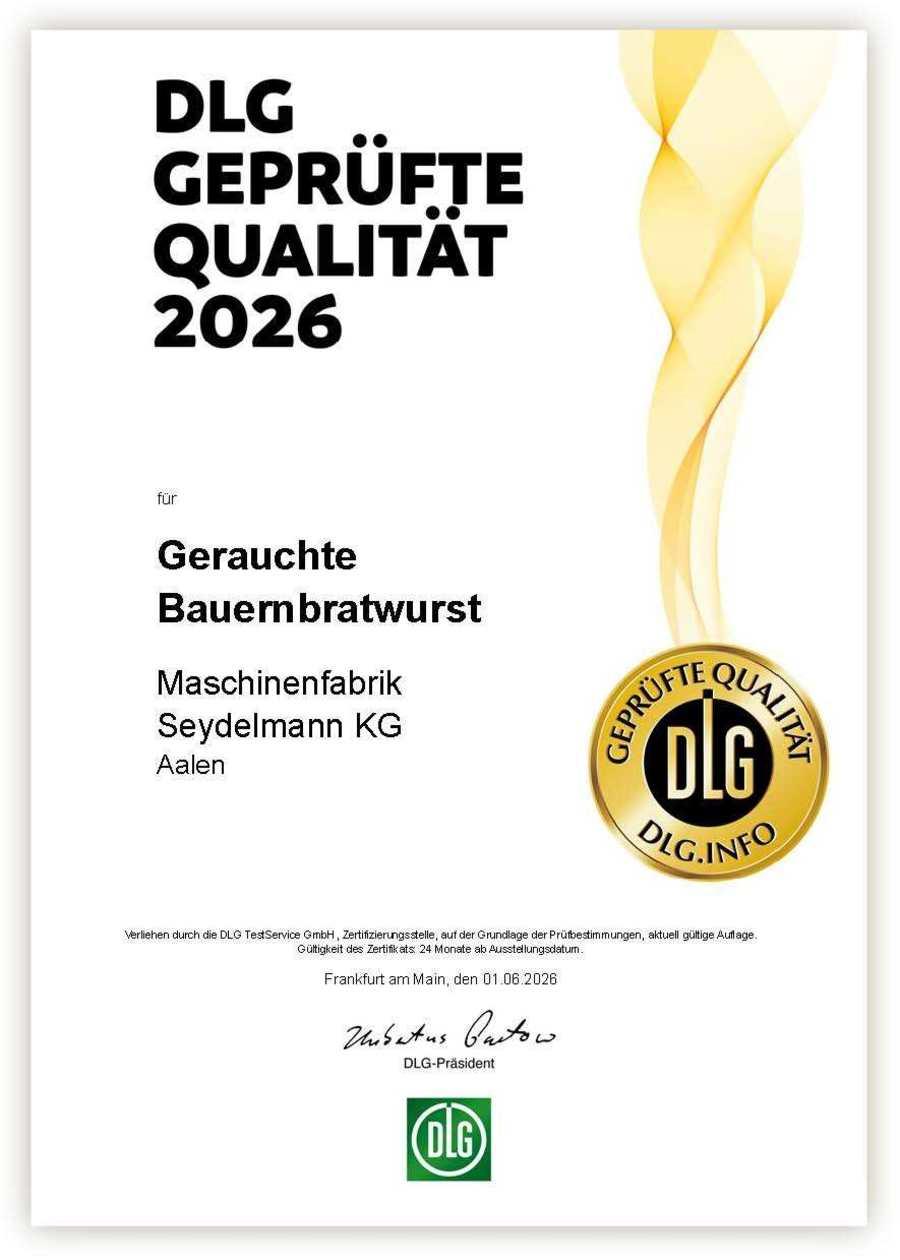
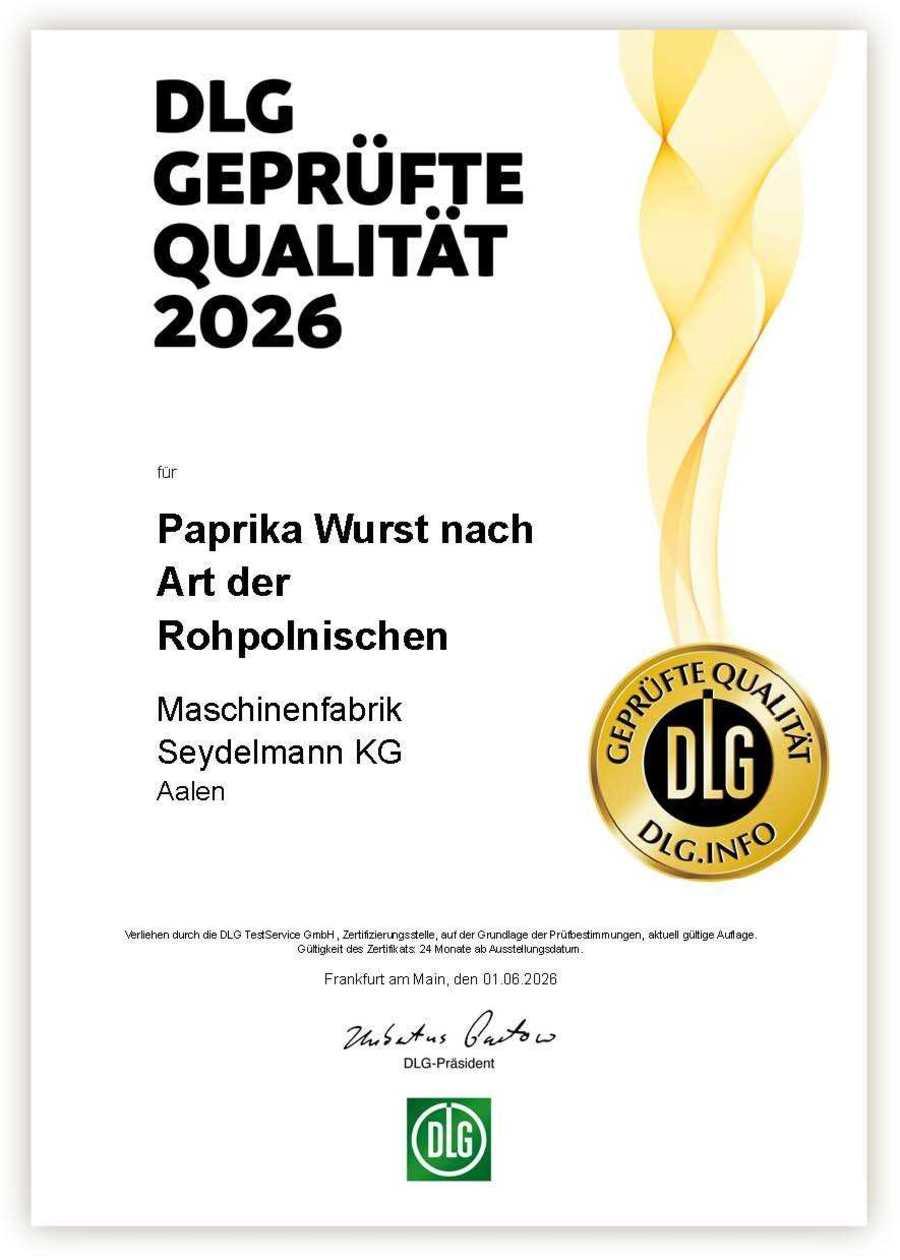
 Once again, the Seydelmann Customer Center and its Head, Michael Kirn, have demonstrated their exceptional product expertise. Three DLG (German Agricultural Society) gold medals from three entries speak for themselves and once again confirm the company’s high standards of quality. 

 The Smoked Farmer’s Bratwurst (Gerauchte Bratwurst), the Delicatessen Pepper Sausage (Delikatess-Pfefferbeißer), and the Paprika Sausage (Paprikawurst) were each awarded gold—all receiving the highest possible score in every evaluation category. Criteria evaluated included appearance, texture, aroma, and taste. The award-winning products impressed the expert jury with their artisanal perfection, well-balanced recipes, and consistently high product quality. 

 The Seydelmann cutting drum made a significant contribution to this exceptional product quality. It enables particularly gentle and precise processing of the raw materials, thereby providing decisive advantages for both manufacturers and consumers. 

 The cutting drum reliably removes even the finest collagenous components, such as tendons, cartilage, or other hard parts. This plays a crucial role, especially in products like “Pfefferbeißer” or coarse bratwurst, which are bitten into directly: Even the smallest traces of collagen are felt by the consumer between their teeth and perceived as unpleasant. The cutting drum reliably removes these, ensuring a significantly improved mouthfeel and a particularly homogeneous product structure. 

 At the same time, the cutting process is extremely gentle on the product. The material is processed with a single clean cut—without crushing or tearing. As a result, the temperature increase in the product remains minimal, the cut surface is particularly clean, and, for example, bacon retains its firm, pleasant texture without unwanted oil accumulation on the surface. The result is products of high visual and sensory quality with excellent consistency. 

 Furthermore, the cutting drum contributes significantly to product safety. Potential foreign objects such as film residues or plastic splinters—for example, from E2 crates—can be reliably removed. Given the complexity of raw material and supply chains, this aspect is becoming increasingly important. 

 The cutting drum also offers considerable added value in terms of efficiency and labor savings. The manual preparation of raw materials—such as cutting out tendons or cartilage by hand—which was often necessary in the past, is largely eliminated. This significantly simplifies day-to-day production work while ensuring reproducible results at a consistently high level. 

 Another advantage lies in the ability to selectively upgrade simpler raw material standards. Thanks to the cutting drum’s specialized processing technology, these materials can be transformed into high-quality premium products of exceptional quality—an important economic factor for modern food producers. 

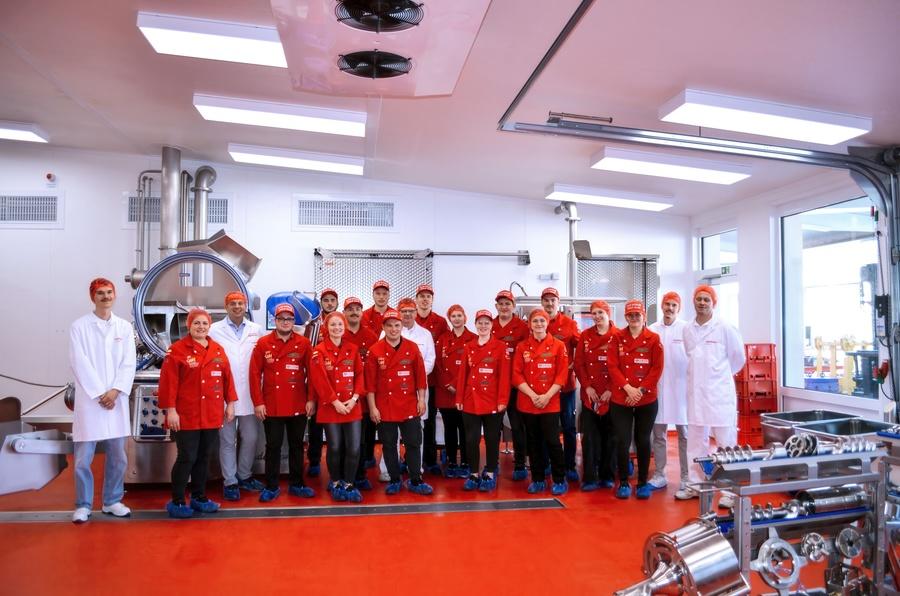
 The Seydelmann Customer Center is fully equipped like a modern food processing facility, complete with machinery for upstream and downstream processes; it meets the highest hygiene standards and holds EU approval for food production. Seydelmann thus offers ideal conditions for realistic trial productions under industrial conditions. 

 “Here, our food technologists work for or alongside the customer on product development and toward the goal of improving quality and efficiency. In this way, we offer not just food processing machines, but rather complete solutions for the challenges and products of tomorrow,” explains Andreas Seydelmann, Managing Partner of Maschinenfabrik Seydelmann KG, outlining the company’s mission. 

 The latest DLG awards confirm not only the performance of the technology used but also the comprehensive expertise of the employees at the customer center. They impressively demonstrate how closely machine expertise, process engineering, and product quality are intertwined at Seydelmann. 
Technology for the Convenience Sector: The Seydelmann FlexMix


How Nagy Butchers Combines Tradition, Direct Sales, and Modern Production

 The Nagy butcher shop sees itself as a classic full-range supplier, yet has a clearly recognizable specialization: the combination of Erzgebirge butchery tradition and Hungarian sausage and meat specialties. 

 The story of Nagy Butcher Shop begins in an unusual way—not in a butcher shop, but in a tailor shop. The father of today’s entrepreneurial family was originally a men’s tailor—a craftsman, yes, but working in a completely different industry. His passion, however, lay in high-quality food, particularly the traditional Hungarian sausage and meat specialties from his homeland. This enthusiasm initially gave rise to a pure distribution model: he imported and sold such specialties, and in some cases had them produced by butcher friends. 

 Early on, however, the desire arose to have more influence over quality, recipes, and production. In 2000, the company first rented space in an existing butcher shop and began manufacturing its own products. The decisive step finally came in 2008: The family opened its own butcher shop with nine employees and a master butcher on staff. This marked the first time an independent artisanal production structure was established. 

 “My father isn’t a trained butcher, but he had an incredible knack for good products,” recalls András Nagy. “He always knows exactly what tastes good, what will sell well—and what doesn’t.” 

 A generational transition rooted in craftsmanship 

 Today, the business is run by András Nagy, who has been the sole managing director since 2026. His development is closely linked to the history of the company. He practically grew up in the shop and learned all aspects of the craft from the ground up. 

 In 2014, he successfully passed the master’s examination in the butchery trade. As a result, the business today combines the entrepreneurial experience of the first generation with the craftsmanship of the second. His parents remain part of the business and provide support, especially during busy periods. 

 “I grew up in the butcher shop. I didn’t just learn the trade—I experienced it every day,” Nagy says of his journey. 

 Gradual Expansion 

 Over the years, the business has been continuously expanded. Today, the facility covers a total area of approximately 580 square meters. About 200 square meters are dedicated to production, around 120 square meters to sales, while the remaining space comprises storage areas, cold rooms, aging rooms, and packaging areas. 

 Each week, the business processes an average of about five tons of meat—sourced exclusively from the region, from producers such as the SachsenGlück cooperative or partner farmers—into sausages, smoked specialties, and fresh meat displays. In total, the company employs about 30 people. Five of them work in production, five in the kitchen, three in the office, while the majority are active in sales and mobile distribution. 

 Modern Technology for Artisanal Production 

 To better handle production peaks while modernizing processes, the company recently invested in new technology. This includes a new grinder and a new cutter. “It was clear to me from the start that only two manufacturers were in the running: the one I already had, and Seydelmann,” explains András Nagy. 

 He took a very close look at both manufacturers and visited their respective production facilities. “It was very interesting to see the machines from a completely different perspective and to experience just how much actual craftsmanship goes into them. What fascinated me about Seydelmann was that almost everything comes from a single source - it’s not just assembled from supplier parts,” recalls Nagy. “And when you also have a technical advisor who comes from the butchery trade himself and with whom you can have an absolutely open and honest conversation on equal terms, that makes the decision-making process much easier.” 

 In addition to the robust build quality, the compact design played a key role, as a larger cutter also had to be integrated into the existing production space - meaning that instead of the previous 70-liter model, the new cutter needed to have a 120-liter bowl. Another decisive factor was the ability to set up an additional workstation with a direct connection to the cutter’s control system. This allows the recipe book to be managed digitally and ingredient quantities to be automatically adjusted to changing production volumes. On a display in the spice room, employees can view all relevant information and weigh the in-house blends instead of using pre-made standard seasonings. 

 The choice fell on a Seydelmann K 120 AC-8 high-performance cutter with an S24 blade system and an AutoCommand 4000, a control system with recipe management. “The blade system makes changing the blades themselves or converting to a different blade configuration that better suits the respective product much easier and faster without having to rebalance the machine. The recipe control system enables fully automatic operation of the machine for all products. The second workstation in the spice warehouse eliminates the source of error associated with manual conversion and makes the paper-based spice book obsolete,” explains Nagy, detailing his decision. 

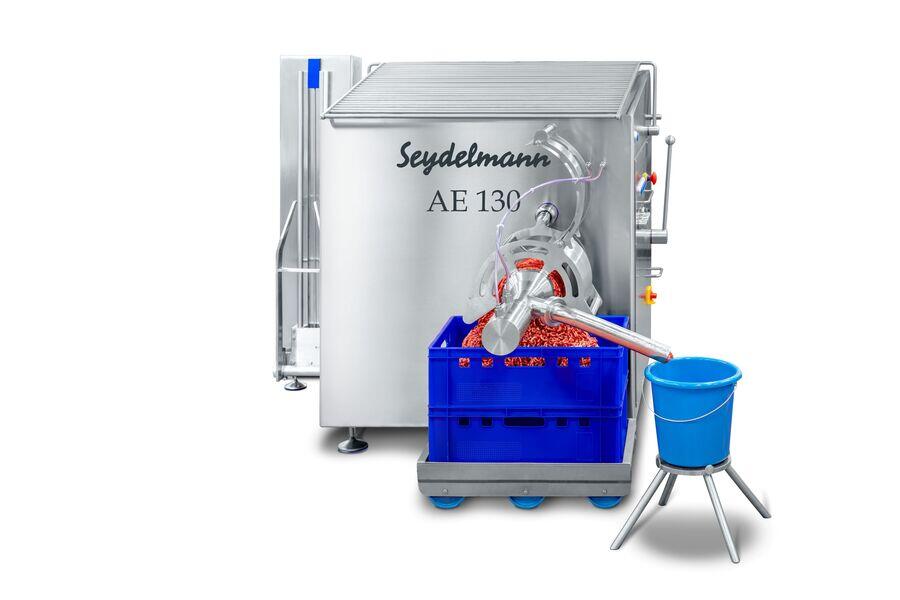
 For the grinder, the choice fell on a Seydelmann AE 130 Automatic Grinder with a pneumatic separating set. “It’s just great to see how smoothly it operates and how cleanly the product comes out. The cutting unit sorts reliably, because even though we want to use every part of the animal, nobody wants tendons, cartilage, or bone fragments in their salami—not even in a Hungarian one,” says Nagy with a laugh. With its conical feeding worm, the AE 130 easily processes partially frozen meat, whole muscle cuts, and even small scraps. The low loading height is another plus. 

 “New technology isn’t just an investment for us,” says Nagy. “It also forces us to rethink our production, and that’s exactly what I want—not to cling to the status quo, but to keep developing myself, my employees, and the company.” 

 Full range with a distinct culinary signature 

 The Nagy butcher shop sees itself as a classic full-range supplier, yet has a clearly recognizable specialization: the combination of Erzgebirge butchery tradition and Hungarian sausage and meat specialties. 

 An important part of this culinary tradition is the philosophy of using every part of the animal, which is widespread in Hungary. As many parts of the animal as possible are processed and developed into unique specialties. 

 From this and other ingredients, products are created that are rarely found in everyday German butcher shops. One example is sausages containing rice, whose origins trace back to historical Mongolian influences in Hungarian cuisine. 

 “This cuisine is very honest,” says Nagy. “You use every part of the animal—and turn it into something delicious.” 

 Freshness as a Key Quality Factor 

 A fundamental principle of production is the uncompromising focus on freshness. The entire product range is made fresh daily to ensure consistently high quality. 

 In addition to technology, experience also plays a crucial role. “You need a feel for the product,” explains Nagy. “You can see, smell, and feel when a sausage or meat product is truly perfect.” 

 This sensory expertise is still considered one of the most important quality characteristics in the butchery trade. 

 Direct sales as a business strategy 

 The company also follows a clear approach to sales. Most products are sold through direct sales. Only a few specialty shops carry individual products from the butcher shop. 

 The main point of contact is the factory outlet at the location in Amtsberg-Dittersdorf, which is complemented by its own country-style kitchen. 

 In addition, the company operates a mobile sales service with four sales vehicles. One vehicle is permanently stationed in Chemnitz, while the others regularly visit towns and villages in the Erzgebirge within a radius of up to 100 kilometers. 

 “A special highlight every year is participating in the Chemnitz Christmas market. Here we offer not only hot bratwurst and Kolbász, but also take-home items. The various raw sausages are real bestsellers. My mother has been a familiar face there for decades and is always the best salesperson,” Nagy says with a laugh. 

 Another sales channel is online retail, which accounts for about five to ten percent of sales. Around 100 packages are shipped weekly, primarily containing specialties from the Erzgebirge and Hungary. 

 Premium meat and changing consumer behavior 

 High-quality meat specialties are also playing an increasingly important role in the product range. These include, for example, products made from Mangalica and Duroc pigs or Angus beef. The animals come from regional farms. 

 Nagy observes a significant shift in consumer behavior: “People are eating less meat than before, but they’re paying more attention to quality. The trend is clearly toward: quality first, price second.” 

 Catering as a second pillar 

 In addition to the butcher shop, retail, and shipping, another business segment has taken root. The butcher shop offers catering for events with up to 1,000 guests. The combination of in-house production, a kitchen, and logistical expertise enables a complete, one-stop service. 

 Focus on energy and employees 

 Like many artisanal food businesses, the Nagy butcher shop is also facing rising energy costs. An important measure for stabilizing costs is a 76 kWp photovoltaic system, which covers part of the business’s energy needs. 

 The business also takes a unique approach to staffing. Nagy deliberately focuses on the individual development of its employees. “We take a close look at each employee: What are their strengths? And then we try to build on exactly those skills.” Career changers are warmly welcomed. 

 An unusual but highly valued component of the employee program is an e-bike program available to all employees. 

 A Trade with a Future 

 The development of the Nagy butcher shop exemplifies how traditional butcher shops can hold their own in today’s market environment: with a clear product identity, consistent direct sales, modern technology, and a strong personal touch. 

 Or, as András Nagy puts it himself: “In the end, it’s always about respect - respect for the product, for the animal, and for the customer. If you take that seriously, artisanal butchery will continue to have its place in the future.” 

The Seydelmann Cutting Drum – Material Upgrading and Product Safety

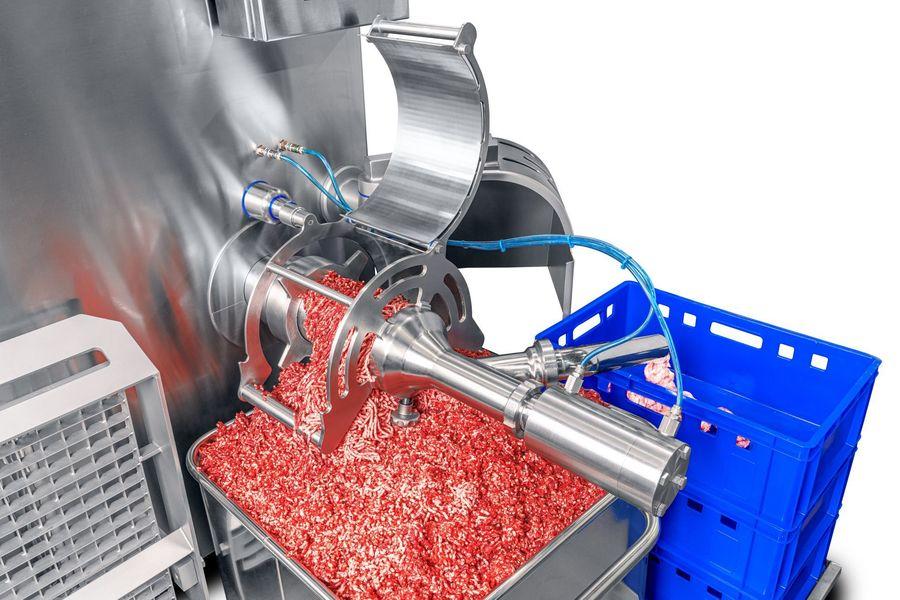
 The Seydelmann cutting drum, a further development of the separation set, is a specially designed cutting system for meat grinders. It is used in place of the conventional cutting set or a separation set—consisting of grinder blades and hole plates—and significantly expands the functionality of the meat grinder. 

 While conventional separating sets perform well in removing hard components such as tendons, cartilage, and bone fragments, they reach their limits with soft components and especially foreign objects, as the meat undergoes pre-grinding before it finally encounters the end hole plate, which is designed as a separation plate. There, all previously chopped foreign objects smaller than the holes in the final hole plate escape and are not discharged as separate. 

 In the cutting drum - unlike conventional separating sets - the unwanted components and foreign bodies are not further pre-ground and thus do not end up as small particles in the final product.  

 The cutting drum enables both the reduction of the raw material to the desired particle size and the reliable removal of unwanted components—such as connective and supporting tissue, cartilage, tendons, bone fragments, and pieces of skin and rind—in a single operation. In addition, foreign objects, such as plastic residues (splinters from E2 crates, plastic film, or even pieces of disposable gloves), can be reliably separated.  

 The cutting system consists of a support spacer for additional guidance, an attached cutting worm, the perforated drum, and the pneumatic discharge valve. The cutting worm presses the soft material through the holes in the perforated drum and cuts it off with the sharp edges of the worm flights only after it has entered these holes, while harder and/or tougher material—i.e., the unwanted components as well as foreign objects—is transported further toward the discharge valve and discharged there. 

 Product safety through foreign object separation 

 Due to more restrictive regulations and requirements, such as the use of packaging and protective films or the increased use of disposable gloves and plastic aprons, the risk of foreign body contamination is rising. By consistently changing the color of plastics and films from white, red, or transparent to blue, even the smallest foreign objects are visible to the consumer in the final product. Splinters from E2 crates and other plastic containers are a common source of foreign objects. Potential recalls caused by this are not only expensive but also cause enormous damage to the company’s reputation. 

 Processing result and cross-section like a meat grinder  

 Unlike with a soft separator, the raw material is not compressed. The result is high-quality ground meat with a defined, mosaic-like texture—not a pressed meat paste. Studies by the German Institute of Food Technology (DIL) have shown that the juice-holding capacity is significantly higher than with conventional cutting or separating units. This means better pH stability and thus extended shelf life, better color stability, and consequently more appealing products. 

 The separated components are collected and discharged in a controlled manner via a pneumatic discharge valve. In this process, the pressure of the product flow itself acts to open the pneumatic cylinder. Only when enough separate has been collected and is resting against the cylinder does the pressure rise high enough to exceed the counterpressure of the pneumatic system; as a result, the cylinder remains open until the separated product has been discharged. Subsequently, the counterpressure of the pneumatic cylinder prevails again. 

 Controlled foreign object separation supports operational quality and safety concepts and contributes to compliance with stringent regulatory requirements. For companies, this means greater product safety, reduced liability risk, and strengthened brand trust. 

  Cost-saving potential through material upgrading and material improvement 

 A key advantage of the cutting drum also lies in targeted material upgrading—see the example in the side note.  

 By separating the lean and fat fractions - a process known as defatting—the quality of the end product is significantly improved and upgraded by at least one commercial grade. In this process, a portion of the fat is separated from the raw material, resulting in leaner ground meat. Undesirable connective tissue can also be removed at the same time, though this is not always the primary focus in this case. Through this material upgrading alone, the purchase of the machine with the cutting system typically pays for itself in less than a year. 

 Side Note: Material Upgrading Using the Example of Pork Shoulders 

 The processing of whole pork shoulders, with the aim of separating the lean and fat portions (so-called defatting), takes place in two steps. In the first pass, only the lean meat is ground at low discharge pressure, while fat, cartilage, tendons, and bone fragments are separated, as are foreign particles. The recovered lean meat can now be used, for example, to produce raw sausage products. 

 The separated material is then passed through the cutting drum again, this time at a higher outlet pressure (back pressure) of the discharge cylinder. The pressure is set so that only the fat is ground, while hard parts and foreign particles are reliably discharged. Due to its high connective tissue content, the fat obtained in this way corresponds to the much more expensive cheek fat and is ideal for improving the binding in cooked sausages. 

 In addition to its use as a conventional separator or for defatting, the cutting drum also offers many other possibilities for material improvement. The following four examples illustrate successful applications: 

 The removal of rind and, consequently, the extraction of fat from smaller sections that are difficult and time-consuming to process using a rind-removing machine, with the separated rind scraps themselves also being further utilized. 

 Removing bile ducts from liver in preparation for liver sausage production.

 Extracting head meat or high-quality fat from whole masks—cooked or raw—while reliably separating out collagen and hard particles. 

 Separation of bony tendons from turkey drumsticks during the production of ground turkey. 

 Many other applications, including those outside of meat processing. 

 Contactless cutting without metal abrasion 

 The system is designed to operate with a cutting worm and a perforated drum with a pneumatic discharge valve. The system operates in a meat grinder without the use of traditional cutting components such as grinder blades or hole blades. Installation is very simple and intuitive. The cutting drum is available as an option for all Seydelmann grinders in sizes E 130, G 160, and U 200. 

  A key technical feature of the cutting drum is the minimal distance between the cutting worm and the perforated drum. This allows the raw material to be ground without contact. Unlike conventional cutting sets, where grinding blades run directly against hole blades, there is no metal-to-metal contact and thus no abrasion, which in turn prevents metal contamination. 

 Metal contamination in the final product is undesirable for several reasons. First, it can lead to discoloration in sliced products due to the corrosion of metal particles, which appear unappetizing to the consumer and can be misinterpreted (blood spots). Second, the abrasion particles themselves, even if very small, can be visible, particularly in light-colored products, such as cheese. For sensitive products, contamination from metal abrasion is generally undesirable and viewed critically; think, for example, of baby food. 

 The contact-free design without metal abrasion significantly reduces wear and ensures very long component service life. The parts do not need to be reground until much later—service life of up to 10,000 tons is possible. 

 At the same time, mechanical resistance in the process is reduced due to lower friction, which has a positive effect on energy consumption, heat input, and product quality.  

 Low product stress and minimal warming

 The non-contact cutting principle ensures that the raw material is processed with particular care. Mechanical stress is significantly lower than with conventional cutting sets or cutting and separating systems. Cell structures remain largely intact, product smearing is prevented, and the particle structure remains stable. This has a very positive effect on juice retention and pH stability. 

 In addition, energy input is very low, resulting in a temperature increase that is up to 60 percent lower than with conventional cutting or separation systems. This minimal heating protects the protein structure, preserves color and binding capacity, and creates optimal conditions for downstream processes. 

 Higher throughput with reduced energy consumption 

  The perforated drum has a significantly larger surface area with more holes than a conventional end-hole blade in a meat grinder. This significantly increases the cutting and discharge area. Compared to conventional cutting or separating sets, a throughput that is approximately 15 to 20 percent higher is achieved. 

 Despite the increased throughput, energy consumption decreases because the material is processed with less mechanical resistance and with less friction. This combination of higher production capacity and lower energy consumption leads to a sustainable increase in operational efficiency. 

  Cost-efficiency and low operating costs 

 In addition to improving product quality, the cutting drum also delivers economic benefits. The absence of metal-to-metal contact reduces wear to a minimum, significantly lowering the need for replacement parts and maintenance costs. The long service life of the components between regrinding cycles sustainably reduces ongoing costs. The cutting drum and cutting worm can be easily reground multiple times. 

 Additionally, the higher throughput ensures increased productivity per unit of time. Combined with reduced energy consumption and improved raw material utilization, this results in noticeable cost savings in day-to-day production. 

 Opting for a cutting drum does not preclude the use of conventional cutting sets on the same meat grinder—these can still be used if the product requires it, such as when grinding fillings. 

 When using the cutting drum in conjunction with a Seydelmann AU 200 U Universal Grinder, the need not only for a soft separator but also for a frozen meat grinder or any flakers and frozen meat choppers is eliminated - a major advantage, as significantly less production space is required, and maintenance costs are reduced. For processing frozen meat—entire blocks down to minus 25 degrees Celsius are possible—a conventional cutting set is simply used. This results in a true 3-in-1 solution for cost-effective operation with minimal space requirements. 

 Conclusion 

 The Seydelmann cutting drum combines product safety, material upgrading, texture-preserving grinding, reliable foreign material separation, and high cost-effectiveness in a compact attachment system for meat grinders. With contact-free cutting, minimal energy input, and increased throughput, it represents a technically mature solution. This makes it a future-oriented component for modern, quality-oriented meat processing facilities. 

显示所有新闻

把最好掌握在手中

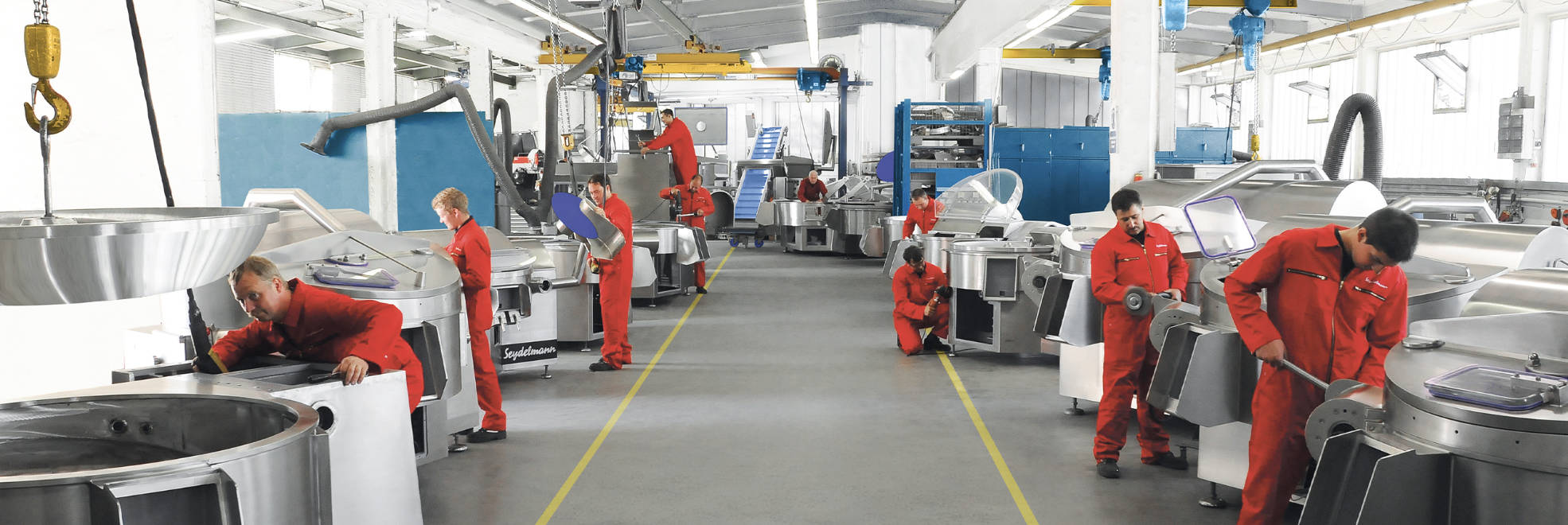
赛德曼机械制造公司致力于高品质食品加工机器的开发,生产和销售已超过180年。 创新和引领潮流的机器由这家位于德国南部的现代化家族企业设计和制造的。赛德曼作为一家全球化公司,绞肉机、斩拌机、搅拌机,乳化机和生产线销往五大洲的150多个国家/地区。赛德曼机器以经久耐用、高效和最高品质,确保客户的产品具有竞争优势。

靠近客户

为我们的客户提供服务,并向他们学习,使我们能够识别和了解他们的需求和期望。这种关系是能够开发、提供和实施保证长期满意的解决方案的前提。

质量管理

赛德曼机器由最高质量的材料和部件制造,并采用最新技术操作。自公司成立以来,我们在Aalen规划、设计和制造所有机器--"德国制造"。

革新

几十年来与从本地区到国际食品行业的肉商的紧密合作,使我们对日常的生产常规有了深刻的了解,也有了丰富的应用经验。
服务实力

开发最佳的个性化解决方案以及专业的机器安装是Seydelmann服务的一部分,同时还可以提供专业的机器指导和技术咨询。