Cutter

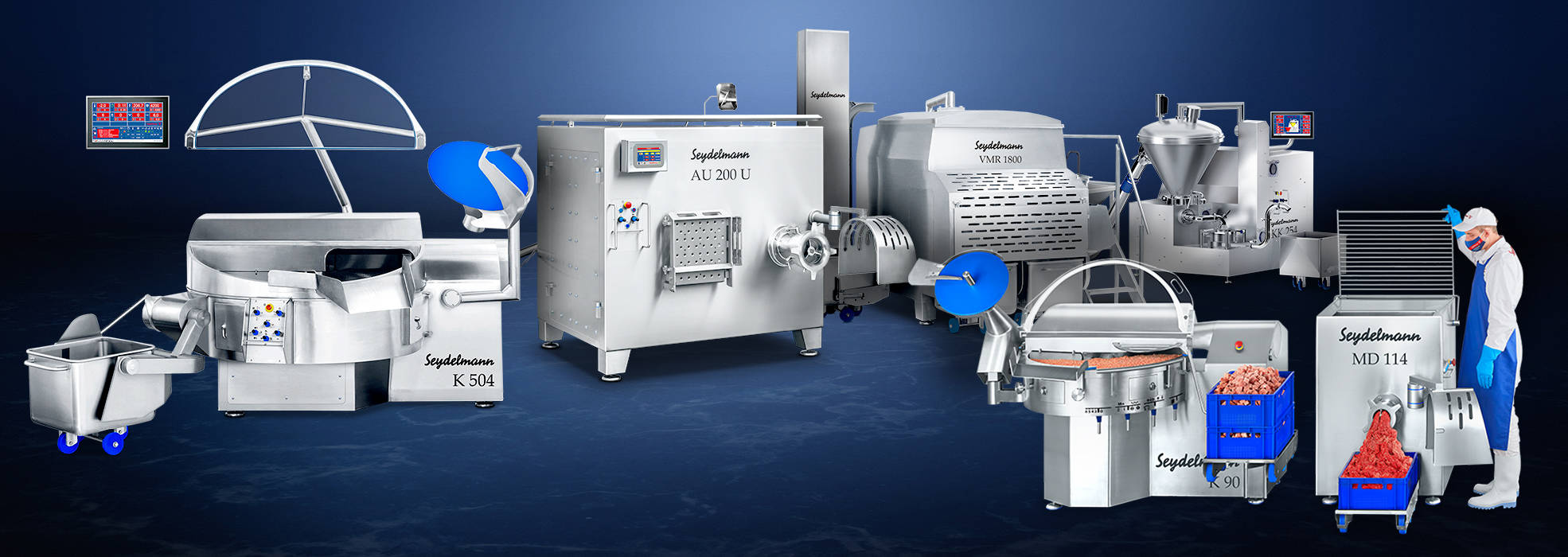
Cutter ad alta efficienza, Cutter Sottovuoto, Cutter Cuocitori, Cutter- Cuocitore- Sottovuoto, Cutter da tavolo, Cutter per salsicce asciutte 

Tritacarne

Tritacarne Standard, Tritacarne automatici, Miscelatore Tritacarne Automatico, Miscelatori Tritacarne, Tritacarne universali, Tritacarne per Carne Congelata

Miscelatori

Miscelatori, Miscelatori-Sottovuoto, Miscelatori-Tritacarne, Trolley Tumbler

Emulsionatori

Konti-cutter, Konti-cutter sottovuoto

Linee di produzione

Linea di produzione completamente automatizzata, linea di produzione parzialmente automatizzata, tecnologia di trasporto, tecnologia di stoccaggio

Technology for the Convenience Sector: The Seydelmann FlexMix

 As a true all-in-one solution, the Seydelmann FlexMix mixer takes convenience food production to a new level—and more than deserves the title of “jack-of-all-trades.” 

 The FlexMix combines numerous process steps into a single system. Whether sautéing, roasting, cooking, braising, steaming, reducing, cooling, or mixing—all applications can be performed efficiently and precisely in one machine. This not only saves time and space but also ensures consistently high product quality. 

 This versatility is made possible by a well-thought-out technical design: Direct steam nozzles enable rapid cooking and simmering, while the double-walled trough (pillow plates) allows for indirect temperature control up to 160 °C—using either steam, hot water, or thermal oil. Cooling processes can also be carried out using cold water or glycol. Optionally, vacuum re-cooling with condensate separation ensures particularly efficient cooling. 

 Another highlight is the flexible mixing paddles with scrapers. They adapt perfectly to the product, prevent buildup on the tank walls, and ensure both gentle and intensive mixing processes—depending on the need. 

 Thanks to numerous optional features, the FlexMix can be individually configured. These include, among others, liquid gas cooling with LN₂ or CO₂, fully automatic recipe controls, integrated CIP cleaning systems, and automatic dosing and weighing technology. Additional equipment such as strainers, electropolished mixing shafts, or frequency-controlled drives further underscore the high standards of efficiency and hygienic design. 

 With a hopper volume ranging from 600 to 4,700 liters, the FlexMix covers a wide variety of production requirements—from medium-sized businesses to large-scale industrial production. 

Conclusion:

 The Seydelmann FlexMix stands for maximum flexibility, process integration, and efficiency in the convenience food sector. A machine that not only combines work steps but also rethinks production processes. 

How Nagy Butchers Combines Tradition, Direct Sales, and Modern Production

 The Nagy butcher shop sees itself as a classic full-range supplier, yet has a clearly recognizable specialization: the combination of Erzgebirge butchery tradition and Hungarian sausage and meat specialties. 

 The story of Nagy Butcher Shop begins in an unusual way—not in a butcher shop, but in a tailor shop. The father of today’s entrepreneurial family was originally a men’s tailor—a craftsman, yes, but working in a completely different industry. His passion, however, lay in high-quality food, particularly the traditional Hungarian sausage and meat specialties from his homeland. This enthusiasm initially gave rise to a pure distribution model: he imported and sold such specialties, and in some cases had them produced by butcher friends. 

 Early on, however, the desire arose to have more influence over quality, recipes, and production. In 2000, the company first rented space in an existing butcher shop and began manufacturing its own products. The decisive step finally came in 2008: The family opened its own butcher shop with nine employees and a master butcher on staff. This marked the first time an independent artisanal production structure was established. 

 “My father isn’t a trained butcher, but he had an incredible knack for good products,” recalls András Nagy. “He always knows exactly what tastes good, what will sell well—and what doesn’t.” 

 A generational transition rooted in craftsmanship 

 Today, the business is run by András Nagy, who has been the sole managing director since 2026. His development is closely linked to the history of the company. He practically grew up in the shop and learned all aspects of the craft from the ground up. 

 In 2014, he successfully passed the master’s examination in the butchery trade. As a result, the business today combines the entrepreneurial experience of the first generation with the craftsmanship of the second. His parents remain part of the business and provide support, especially during busy periods. 

 “I grew up in the butcher shop. I didn’t just learn the trade—I experienced it every day,” Nagy says of his journey. 

 Gradual Expansion 

 Over the years, the business has been continuously expanded. Today, the facility covers a total area of approximately 580 square meters. About 200 square meters are dedicated to production, around 120 square meters to sales, while the remaining space comprises storage areas, cold rooms, aging rooms, and packaging areas. 

 Each week, the business processes an average of about five tons of meat—sourced exclusively from the region, from producers such as the SachsenGlück cooperative or partner farmers—into sausages, smoked specialties, and fresh meat displays. In total, the company employs about 30 people. Five of them work in production, five in the kitchen, three in the office, while the majority are active in sales and mobile distribution. 

 Modern Technology for Artisanal Production 

 To better handle production peaks while modernizing processes, the company recently invested in new technology. This includes a new grinder and a new cutter. “It was clear to me from the start that only two manufacturers were in the running: the one I already had, and Seydelmann,” explains András Nagy. 

 He took a very close look at both manufacturers and visited their respective production facilities. “It was very interesting to see the machines from a completely different perspective and to experience just how much actual craftsmanship goes into them. What fascinated me about Seydelmann was that almost everything comes from a single source - it’s not just assembled from supplier parts,” recalls Nagy. “And when you also have a technical advisor who comes from the butchery trade himself and with whom you can have an absolutely open and honest conversation on equal terms, that makes the decision-making process much easier.” 

 In addition to the robust build quality, the compact design played a key role, as a larger cutter also had to be integrated into the existing production space - meaning that instead of the previous 70-liter model, the new cutter needed to have a 120-liter bowl. Another decisive factor was the ability to set up an additional workstation with a direct connection to the cutter’s control system. This allows the recipe book to be managed digitally and ingredient quantities to be automatically adjusted to changing production volumes. On a display in the spice room, employees can view all relevant information and weigh the in-house blends instead of using pre-made standard seasonings. 

 The choice fell on a Seydelmann K 120 AC-8 high-performance cutter with an S24 blade system and an AutoCommand 4000, a control system with recipe management. “The blade system makes changing the blades themselves or converting to a different blade configuration that better suits the respective product much easier and faster without having to rebalance the machine. The recipe control system enables fully automatic operation of the machine for all products. The second workstation in the spice warehouse eliminates the source of error associated with manual conversion and makes the paper-based spice book obsolete,” explains Nagy, detailing his decision. 

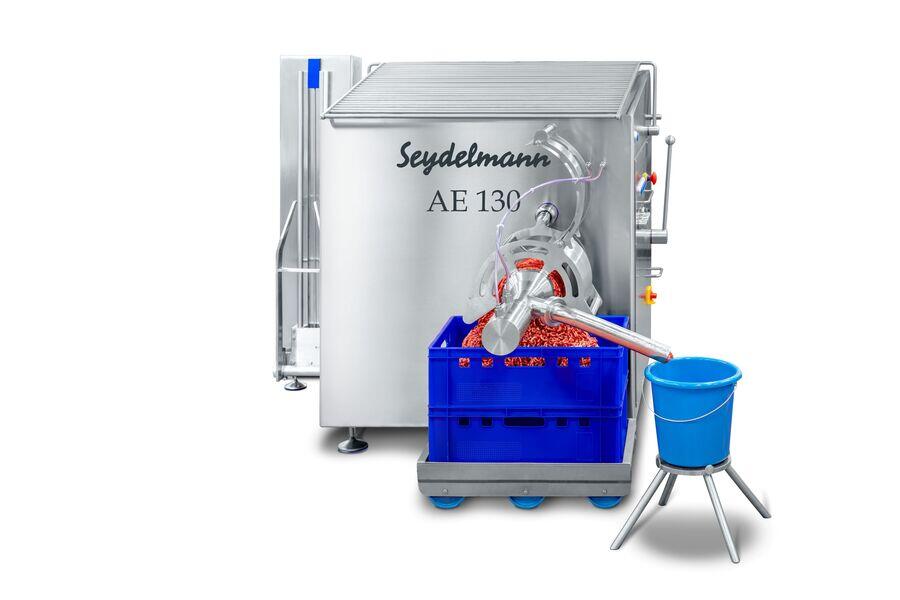
 For the grinder, the choice fell on a Seydelmann AE 130 Automatic Grinder with a pneumatic separating set. “It’s just great to see how smoothly it operates and how cleanly the product comes out. The cutting unit sorts reliably, because even though we want to use every part of the animal, nobody wants tendons, cartilage, or bone fragments in their salami—not even in a Hungarian one,” says Nagy with a laugh. With its conical feeding worm, the AE 130 easily processes partially frozen meat, whole muscle cuts, and even small scraps. The low loading height is another plus. 

 “New technology isn’t just an investment for us,” says Nagy. “It also forces us to rethink our production, and that’s exactly what I want—not to cling to the status quo, but to keep developing myself, my employees, and the company.” 

 Full range with a distinct culinary signature 

 The Nagy butcher shop sees itself as a classic full-range supplier, yet has a clearly recognizable specialization: the combination of Erzgebirge butchery tradition and Hungarian sausage and meat specialties. 

 An important part of this culinary tradition is the philosophy of using every part of the animal, which is widespread in Hungary. As many parts of the animal as possible are processed and developed into unique specialties. 

 From this and other ingredients, products are created that are rarely found in everyday German butcher shops. One example is sausages containing rice, whose origins trace back to historical Mongolian influences in Hungarian cuisine. 

 “This cuisine is very honest,” says Nagy. “You use every part of the animal—and turn it into something delicious.” 

 Freshness as a Key Quality Factor 

 A fundamental principle of production is the uncompromising focus on freshness. The entire product range is made fresh daily to ensure consistently high quality. 

 In addition to technology, experience also plays a crucial role. “You need a feel for the product,” explains Nagy. “You can see, smell, and feel when a sausage or meat product is truly perfect.” 

 This sensory expertise is still considered one of the most important quality characteristics in the butchery trade. 

 Direct sales as a business strategy 

 The company also follows a clear approach to sales. Most products are sold through direct sales. Only a few specialty shops carry individual products from the butcher shop. 

 The main point of contact is the factory outlet at the location in Amtsberg-Dittersdorf, which is complemented by its own country-style kitchen. 

 In addition, the company operates a mobile sales service with four sales vehicles. One vehicle is permanently stationed in Chemnitz, while the others regularly visit towns and villages in the Erzgebirge within a radius of up to 100 kilometers. 

 “A special highlight every year is participating in the Chemnitz Christmas market. Here we offer not only hot bratwurst and Kolbász, but also take-home items. The various raw sausages are real bestsellers. My mother has been a familiar face there for decades and is always the best salesperson,” Nagy says with a laugh. 

 Another sales channel is online retail, which accounts for about five to ten percent of sales. Around 100 packages are shipped weekly, primarily containing specialties from the Erzgebirge and Hungary. 

 Premium meat and changing consumer behavior 

 High-quality meat specialties are also playing an increasingly important role in the product range. These include, for example, products made from Mangalica and Duroc pigs or Angus beef. The animals come from regional farms. 

 Nagy observes a significant shift in consumer behavior: “People are eating less meat than before, but they’re paying more attention to quality. The trend is clearly toward: quality first, price second.” 

 Catering as a second pillar 

 In addition to the butcher shop, retail, and shipping, another business segment has taken root. The butcher shop offers catering for events with up to 1,000 guests. The combination of in-house production, a kitchen, and logistical expertise enables a complete, one-stop service. 

 Focus on energy and employees 

 Like many artisanal food businesses, the Nagy butcher shop is also facing rising energy costs. An important measure for stabilizing costs is a 76 kWp photovoltaic system, which covers part of the business’s energy needs. 

 The business also takes a unique approach to staffing. Nagy deliberately focuses on the individual development of its employees. “We take a close look at each employee: What are their strengths? And then we try to build on exactly those skills.” Career changers are warmly welcomed. 

 An unusual but highly valued component of the employee program is an e-bike program available to all employees. 

 A Trade with a Future 

 The development of the Nagy butcher shop exemplifies how traditional butcher shops can hold their own in today’s market environment: with a clear product identity, consistent direct sales, modern technology, and a strong personal touch. 

 Or, as András Nagy puts it himself: “In the end, it’s always about respect - respect for the product, for the animal, and for the customer. If you take that seriously, artisanal butchery will continue to have its place in the future.” 

The Seydelmann Cutting Drum – Material Upgrading and Product Safety

 The Seydelmann cutting drum, a further development of the separation set, is a specially designed cutting system for meat grinders. It is used in place of the conventional cutting set or a separation set—consisting of grinder blades and hole plates—and significantly expands the functionality of the meat grinder. 

 While conventional separating sets perform well in removing hard components such as tendons, cartilage, and bone fragments, they reach their limits with soft components and especially foreign objects, as the meat undergoes pre-grinding before it finally encounters the end hole plate, which is designed as a separation plate. There, all previously chopped foreign objects smaller than the holes in the final hole plate escape and are not discharged as separate. 

 In the cutting drum - unlike conventional separating sets - the unwanted components and foreign bodies are not further pre-ground and thus do not end up as small particles in the final product.  

 The cutting drum enables both the reduction of the raw material to the desired particle size and the reliable removal of unwanted components—such as connective and supporting tissue, cartilage, tendons, bone fragments, and pieces of skin and rind—in a single operation. In addition, foreign objects, such as plastic residues (splinters from E2 crates, plastic film, or even pieces of disposable gloves), can be reliably separated.  

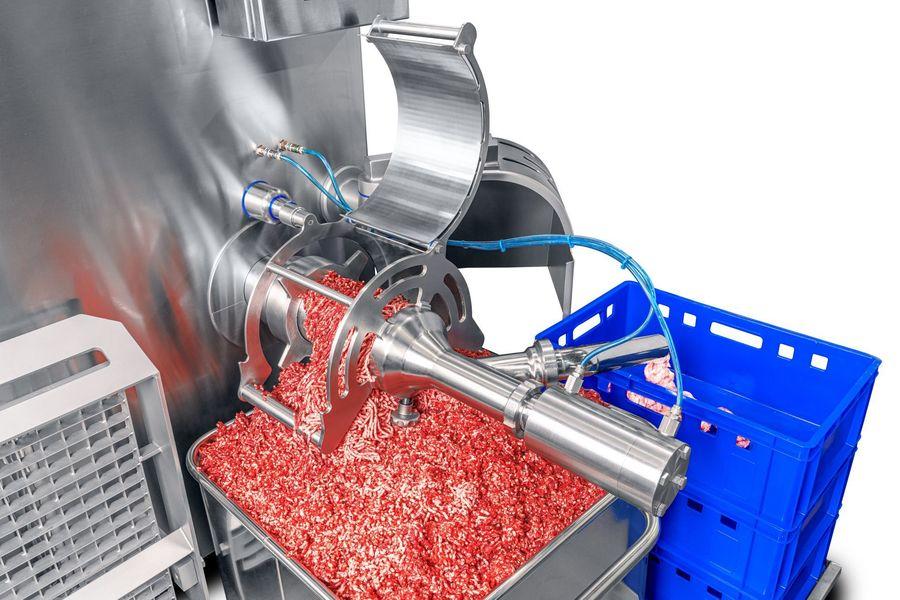
 The cutting system consists of a support spacer for additional guidance, an attached cutting worm, the perforated drum, and the pneumatic discharge valve. The cutting worm presses the soft material through the holes in the perforated drum and cuts it off with the sharp edges of the worm flights only after it has entered these holes, while harder and/or tougher material—i.e., the unwanted components as well as foreign objects—is transported further toward the discharge valve and discharged there. 

 Product safety through foreign object separation 

 Due to more restrictive regulations and requirements, such as the use of packaging and protective films or the increased use of disposable gloves and plastic aprons, the risk of foreign body contamination is rising. By consistently changing the color of plastics and films from white, red, or transparent to blue, even the smallest foreign objects are visible to the consumer in the final product. Splinters from E2 crates and other plastic containers are a common source of foreign objects. Potential recalls caused by this are not only expensive but also cause enormous damage to the company’s reputation. 

 Processing result and cross-section like a meat grinder  

 Unlike with a soft separator, the raw material is not compressed. The result is high-quality ground meat with a defined, mosaic-like texture—not a pressed meat paste. Studies by the German Institute of Food Technology (DIL) have shown that the juice-holding capacity is significantly higher than with conventional cutting or separating units. This means better pH stability and thus extended shelf life, better color stability, and consequently more appealing products. 

 The separated components are collected and discharged in a controlled manner via a pneumatic discharge valve. In this process, the pressure of the product flow itself acts to open the pneumatic cylinder. Only when enough separate has been collected and is resting against the cylinder does the pressure rise high enough to exceed the counterpressure of the pneumatic system; as a result, the cylinder remains open until the separated product has been discharged. Subsequently, the counterpressure of the pneumatic cylinder prevails again. 

 Controlled foreign object separation supports operational quality and safety concepts and contributes to compliance with stringent regulatory requirements. For companies, this means greater product safety, reduced liability risk, and strengthened brand trust. 

  Cost-saving potential through material upgrading and material improvement 

 A key advantage of the cutting drum also lies in targeted material upgrading—see the example in the side note.  

 By separating the lean and fat fractions - a process known as defatting—the quality of the end product is significantly improved and upgraded by at least one commercial grade. In this process, a portion of the fat is separated from the raw material, resulting in leaner ground meat. Undesirable connective tissue can also be removed at the same time, though this is not always the primary focus in this case. Through this material upgrading alone, the purchase of the machine with the cutting system typically pays for itself in less than a year. 

 Side Note: Material Upgrading Using the Example of Pork Shoulders 

 The processing of whole pork shoulders, with the aim of separating the lean and fat portions (so-called defatting), takes place in two steps. In the first pass, only the lean meat is ground at low discharge pressure, while fat, cartilage, tendons, and bone fragments are separated, as are foreign particles. The recovered lean meat can now be used, for example, to produce raw sausage products. 

 The separated material is then passed through the cutting drum again, this time at a higher outlet pressure (back pressure) of the discharge cylinder. The pressure is set so that only the fat is ground, while hard parts and foreign particles are reliably discharged. Due to its high connective tissue content, the fat obtained in this way corresponds to the much more expensive cheek fat and is ideal for improving the binding in cooked sausages. 

 In addition to its use as a conventional separator or for defatting, the cutting drum also offers many other possibilities for material improvement. The following four examples illustrate successful applications: 

 The removal of rind and, consequently, the extraction of fat from smaller sections that are difficult and time-consuming to process using a rind-removing machine, with the separated rind scraps themselves also being further utilized. 

 Removing bile ducts from liver in preparation for liver sausage production.

 Extracting head meat or high-quality fat from whole masks—cooked or raw—while reliably separating out collagen and hard particles. 

 Separation of bony tendons from turkey drumsticks during the production of ground turkey. 

 Many other applications, including those outside of meat processing. 

 Contactless cutting without metal abrasion 

 The system is designed to operate with a cutting worm and a perforated drum with a pneumatic discharge valve. The system operates in a meat grinder without the use of traditional cutting components such as grinder blades or hole blades. Installation is very simple and intuitive. The cutting drum is available as an option for all Seydelmann grinders in sizes E 130, G 160, and U 200. 

  A key technical feature of the cutting drum is the minimal distance between the cutting worm and the perforated drum. This allows the raw material to be ground without contact. Unlike conventional cutting sets, where grinding blades run directly against hole blades, there is no metal-to-metal contact and thus no abrasion, which in turn prevents metal contamination. 

 Metal contamination in the final product is undesirable for several reasons. First, it can lead to discoloration in sliced products due to the corrosion of metal particles, which appear unappetizing to the consumer and can be misinterpreted (blood spots). Second, the abrasion particles themselves, even if very small, can be visible, particularly in light-colored products, such as cheese. For sensitive products, contamination from metal abrasion is generally undesirable and viewed critically; think, for example, of baby food. 

 The contact-free design without metal abrasion significantly reduces wear and ensures very long component service life. The parts do not need to be reground until much later—service life of up to 10,000 tons is possible. 

 At the same time, mechanical resistance in the process is reduced due to lower friction, which has a positive effect on energy consumption, heat input, and product quality.  

 Low product stress and minimal warming

 The non-contact cutting principle ensures that the raw material is processed with particular care. Mechanical stress is significantly lower than with conventional cutting sets or cutting and separating systems. Cell structures remain largely intact, product smearing is prevented, and the particle structure remains stable. This has a very positive effect on juice retention and pH stability. 

 In addition, energy input is very low, resulting in a temperature increase that is up to 60 percent lower than with conventional cutting or separation systems. This minimal heating protects the protein structure, preserves color and binding capacity, and creates optimal conditions for downstream processes. 

 Higher throughput with reduced energy consumption 

  The perforated drum has a significantly larger surface area with more holes than a conventional end-hole blade in a meat grinder. This significantly increases the cutting and discharge area. Compared to conventional cutting or separating sets, a throughput that is approximately 15 to 20 percent higher is achieved. 

 Despite the increased throughput, energy consumption decreases because the material is processed with less mechanical resistance and with less friction. This combination of higher production capacity and lower energy consumption leads to a sustainable increase in operational efficiency. 

  Cost-efficiency and low operating costs 

 In addition to improving product quality, the cutting drum also delivers economic benefits. The absence of metal-to-metal contact reduces wear to a minimum, significantly lowering the need for replacement parts and maintenance costs. The long service life of the components between regrinding cycles sustainably reduces ongoing costs. The cutting drum and cutting worm can be easily reground multiple times. 

 Additionally, the higher throughput ensures increased productivity per unit of time. Combined with reduced energy consumption and improved raw material utilization, this results in noticeable cost savings in day-to-day production. 

 Opting for a cutting drum does not preclude the use of conventional cutting sets on the same meat grinder—these can still be used if the product requires it, such as when grinding fillings. 

 When using the cutting drum in conjunction with a Seydelmann AU 200 U Universal Grinder, the need not only for a soft separator but also for a frozen meat grinder or any flakers and frozen meat choppers is eliminated - a major advantage, as significantly less production space is required, and maintenance costs are reduced. For processing frozen meat—entire blocks down to minus 25 degrees Celsius are possible—a conventional cutting set is simply used. This results in a true 3-in-1 solution for cost-effective operation with minimal space requirements. 

 Conclusion 

 The Seydelmann cutting drum combines product safety, material upgrading, texture-preserving grinding, reliable foreign material separation, and high cost-effectiveness in a compact attachment system for meat grinders. With contact-free cutting, minimal energy input, and increased throughput, it represents a technically mature solution. This makes it a future-oriented component for modern, quality-oriented meat processing facilities. 

Nose to Tail – Jenzer Butcher Shop and its uncompromising approach to meat

 Where no cut goes to waste 

 Anyone who steps into Jenzer Butcher Shop in Arlesheim quickly realizes, things are done differently here. Instead of a matter-of-fact routine, there’s something special, refined, and almost rebellious in the air. Behind the counter stands Raffael Jenzer, master butcher, entrepreneur, and innovator. He runs the business as the fifth-generation owner alongside his parents, Barbara and Christoph, and much of what happens here defies convention. 

 “When my mother, a former vegetarian, joined the business, she asked a lot of questions—including uncomfortable ones. About the origin of our meat and the way the animals are raised,” Jenzer recounts from the family history, explaining who sparked the reflection and ultimately the shift in thinking. 

 As early as the mid-1990s, he began transitioning the entire product range to meat from species-appropriate, regional livestock farming—a decision that hardly anyone understood at the time. Today, it is taken for granted. 

 “Today, we’re trying to avoid food waste with the ‘Waste!?’ concept. The word provokes and makes you think,” says Jenzer with a smile. Pork fat becomes crackling lard; beef fat yields Belgian fries; and meat from laying hens is turned into meat pies, terrines, chicken sticks, or currywurst. The goal is to show respect for the slaughtered animals and to communicate this to customers who appreciate it. 

 The retail store is now much more than just a butcher’s counter. In addition to high-quality food and beverages—from the region—there is also a seasonal assortment of additional items. “Why should we only offer ham during asparagus season and not also offer the asparagus and homemade mayonnaise from our in-house restaurant to go with it? That saves our customers extra trips and brings us revenue,” explains Raffael Jenzer. 

 Focus on quality 

 The production facilities and machinery are also fully geared toward maximizing material yield. The backbone of the operation consists of a high-performance vacuum cutter K 124 H and an automatic grinder AE 130 with a cutting set from Seydelmann. “We offer the highest quality, and we work with the highest quality. The two go hand in hand,” explains Jenzer. 

 The decision to choose Seydelmann machines was a very deliberate one. The family thoroughly researched various brands. “Originally, the family had another manufacturer in mind,” recalls Steffen Kromer, sales manager at Seydelmann. “That’s right,” confirms Raffael Jenzer, “but the longer we talked, the more I realized that this was the right choice for us.” In the end, several aspects were convincing, including the very compact design with the separate control cabinet (now installed in the underground garage), as the sausage kitchen in the historic building does not offer much space. Another very important criterion was the well-thought-out hygienic design. Thanks to the wide-opening main cover and the slim knife shaft arm, all areas are easily accessible and quick and simple to clean. The ergonomic and intuitively simple operation via cross-lever switches and the modern control system—which offers us many features such as traceability, recipe control, and, with an eye toward the future, integration with inventory management—also carried significant weight. “The icing on the cake for us was also the unusually long spare parts warranty and the availability of service. Because even though the machines are essentially built to last forever—things can always happen. We also really appreciate that a family is behind the company, because that means you have a reliable partner,” Jenzer continues. In addition to the representative responsible for machine service in Switzerland, there is also always access to one of the more than 20 Seydelmann service technicians strategically distributed throughout Germany, whose service vehicles are equipped not only with all necessary tools but also with the most common spare parts. 

 “…and then to have a Seydelmann employee—himself a butcher and meat technologist—spend two days with us providing training on the machine and producing all our products alongside us…it simply doesn’t get any better than that.” 

 A family business as a think tank 

 The main location on Ermitagestrasse in Arlesheim combines a shop, production facility, and restaurant. Those who want to buy meat go to the counter; those who prefer to have it prepared sit down at a table in the “Ochsen” next door. The butcher shop and kitchen are closely intertwined—not just physically. Everything produced in one part of the building finds use in the other.

 Sibylle Böhler runs the restaurant, and head chef Dominic Meier champions a cuisine that doesn’t rely solely on prime cuts. From pork knuckle to liver, everything finds a place on the menu—usually in two portion sizes, so nothing is left on the plates. Avoiding food waste wherever possible is more than just a buzzword here.

 The next generation is also continuing this ambitious approach. Son Raffael has made the utilization of laying hens a particular priority. Among other things, he developed a pâté made from laying hen meat and chicken liver—now a bestseller. The very high knife speeds and the narrow, fluid-dynamic cutting chamber of the Seydelmann high-performance vacuum cutter, in combination with the bowl geometry, ensure not only short production times and high fineness but also high protein breakdown—an effect that is further enhanced during vacuum cutting. 

 “We want to show that sustainability doesn’t taste like sacrifice,” says Christoph Jenzer. And indeed it doesn’t: The golden-brown pâté dough, baked with lard, crunches so delicately when cut that you immediately understand the concept behind it.

 The “Butcher’s Cut” – a central component 

 Affectionately known in Switzerland as “Metzgerstückli,” the “Second Cut” or “Butcher’s Cut” is a central component for implementing the “nose-to-tail” philosophy. At Jenzer, however, they go far beyond the familiar steaks. “I could get upset every time people talk about ‘first-cut’ and inferior ‘second-cut’ meat. Ultimately, this is just a market convention, and that’s what needs to change,” explains Raffael Jenzer. He sees butchers, the restaurant industry, and large-scale consumers as primarily responsible for this. “We only have a limited number of fillets available each week, so we provide our customers with detailed advice when it comes to switching to other cuts of meat, which may then require a different preparation method. Most of the time, the lower price helps, but it won’t work without advice and persuasion,” he explains. “Until you’ve tried it yourself, it’s usually hard to imagine that cuts other than veal entrecôte or false fillet—such as the breast—can also make an excellent Vitello Tonnato.” Only the trimmings from trimming and cutting end up in the sausage. “Sausage culture in Switzerland is nowhere near as developed as it is in Germany, for example. So, we don’t need such large quantities of meat for sausage production,” explains Raffael Jenzer. This is where Seydelmann’s unique separating plate comes into its own during mincing, reliably separating tendons, bone fragments, and cartilage, thereby significantly improving the quality of coarser end products in particular—such as raw sausages, ground meat, or coarse bratwurst—and providing a clean cut. In addition, it makes the cutting process easier and enables maximum utilization of raw materials. The grinder itself, an AE 130 automatic grinder, allows for the processing of larger pieces of meat thanks to its conical feed screw and reliably feeds them to the working screw. The low-profile design facilitates loading, and the polished, sloping surfaces make cleaning easier.

 The craft that endures 

 The Jenzer butcher shop employs around 80 people and trains young butchers. The work follows traditional principles—but with modern organization. The meat remains on the bone before being processed. “Cutting while warm is easier, but we give the meat time,” explains Jenzer. It should mature, not just be processed. 

 Behind the shop lies the so-called meat workshop: a transparent production facility with a viewing window facing the street. Passersby can watch as the meat is cut and seasoned. The message is clear: craftsmanship should be visible. 

 Crisis as a turning point 

 When the pandemic caused sales to restaurants to plummet, Jenzer could easily have put the business on short-time work. But he did the opposite. Within two days, he set up a home delivery service, digitized the ordering process, and developed new products. No one was laid off, and no government aid was sought. Instead of stagnation, there was movement. 

 “We wanted to prove that craftsmanship can work even in a crisis,” he says in retrospect. The strategy paid off: The business emerged from the pandemic stronger than when it went in. In particular, orders from bulk buyers—such as restaurants, hospitals, and nursing homes—now come almost exclusively online via the HOGASHOP. Jenzer delivers around 100 orders daily within a 20-kilometer radius. 

 Metzgerhuus Füllinsdorf – An alternative to the meat industry 

 In the summer of 2025, the family’s biggest dream became a reality: the Metzgerhuus in Füllinsdorf, a new regional slaughterhouse—small, transparent, and animal-friendly. Together with four other butcher families, Raffael Jenzer brought the 12-million-franc project to life. The concrete ramp for livestock transport was built to slope upward so that the animals walk “uphill”—following their natural instinct. “We take our time,” says Raffael Jenzer. “One animal every 15 minutes—that’s our rhythm.” The slaughterhouse has a large window for customers and offers many events and educational sessions on the topic of conscious and high-quality meat consumption. Because the participating farms are convinced that only if we treat the animals with respect on the farm, during transport, and at slaughter will customers stay loyal in the long term. 

 The attached Regio-Shop 365 is open daily and sells meat from its own production—“born, processed, and eaten in the Basel region.” The philosophy: less meat, but better meat. “We assume that in the future, people will eat only half as much meat,” says Jenzer. “Then at least it should be good.” 

 Less is more 

 The philosophy that runs through every aspect of the business is: quality over quantity. Raffael Jenzer is convinced that people will eat less meat in the future—but more mindfully. “If you’re only eating half as much, it has to be twice as good,” he says. 

 This attitude is reflected in everything the family does, from animal welfare and short transport routes to product design. It’s about responsibility and appreciation, about enjoyment without excess. 

 A business with a conscience 

 Today, the Jenzer butcher shop is considered a pioneer in sustainable meat processing in Switzerland. It combines tradition with innovation, craftsmanship with a conscience. The name stands for quality—and for a new perspective on what meat can be: not a byproduct or waste product, but a whole. 

 When Raffael Jenzer walks through his shop in the evening, he sometimes pauses for a moment. Between the shelves of pâtés, sausages, and jars of lard lies the essence of a family business that continually reimagines what many have long since abandoned. 

 “Meat,” he says, “is not the problem. It’s the way we handle it.” 

mostra tutte le notizie

Nelle mani dei migliori

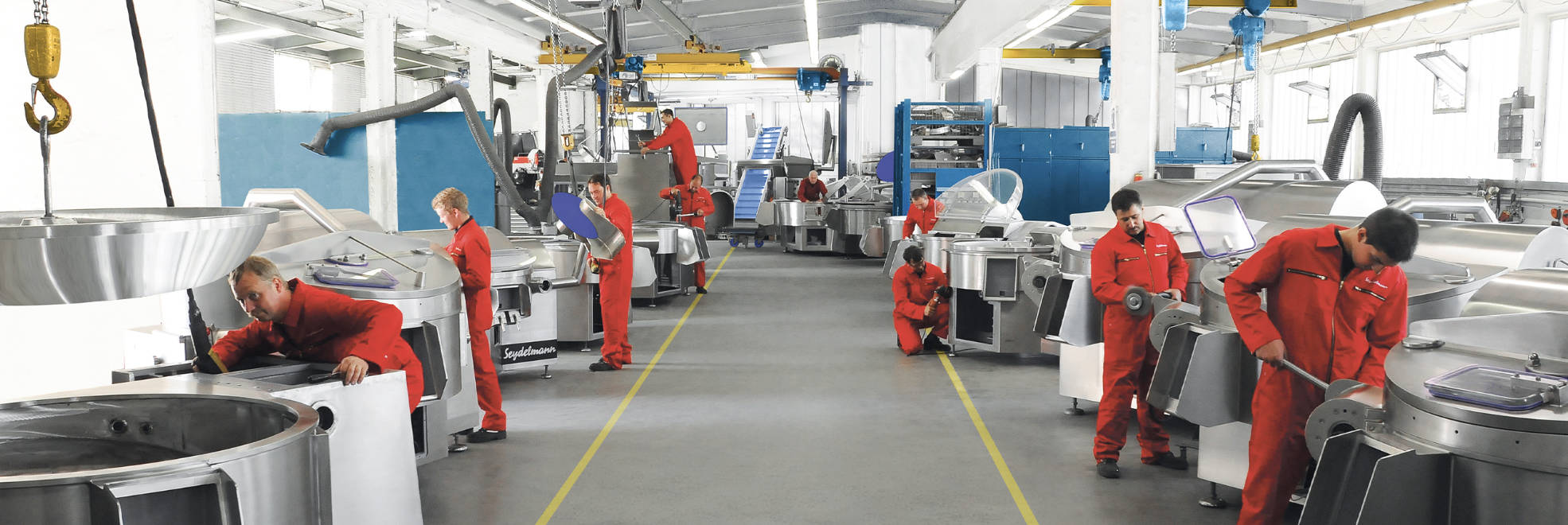
Da oltre 180 anni la Maschinenfabrik Seydelmann KG è all'avanguardia nello sviluppo, nella produzione e nella distribuzione di macchine per la lavorazione degli alimenti di alta qualità. Realizzati esclusivamente nel sud della Germania, i macchine Seydelmann sono installati in tutti e cinque i continenti, in oltre 150 paesi nel mondo. Le macchine Seydelmann sono durevoli e producono efficientemente la più alta qualità, assicurando così vantaggi competitivi per i loro utilizzatori.

Prossimità del cliente

Essere presenti per i nostri clienti e imparare da loro ci permette di identificare e capire le loro esigenze e aspettative. Questo tipo di relazione è il presupposto per poter sviluppare, offrire e implementare soluzioni che garantiscono la soddisfazione a lungo termine.

Qualità

Le macchine Seydelmann sono fabbricate con materiali e componenti di altissima qualità e sono gestite con la tecnologia più recente. Dalla fondazione dell'azienda progettiamo, disegniamo e produciamo tutte le macchine ad Aalen - "MADE IN GERMANY".

Innovazione

La stretta collaborazione con macellai della regione e dell'industria alimentare internazionale per molti decenni ci permette di avere una profonda comprensione della routine di produzione quotidiana e una vasta esperienza in una vasta gamma di applicazioni.
Forza del servizio

Lo sviluppo della migliore soluzione individuale possibile e l'installazione professionale della macchina fanno parte del servizio Seydelmann, così come la possibilità di un'istruzione professionale della macchina con consulenza tecnologica.