


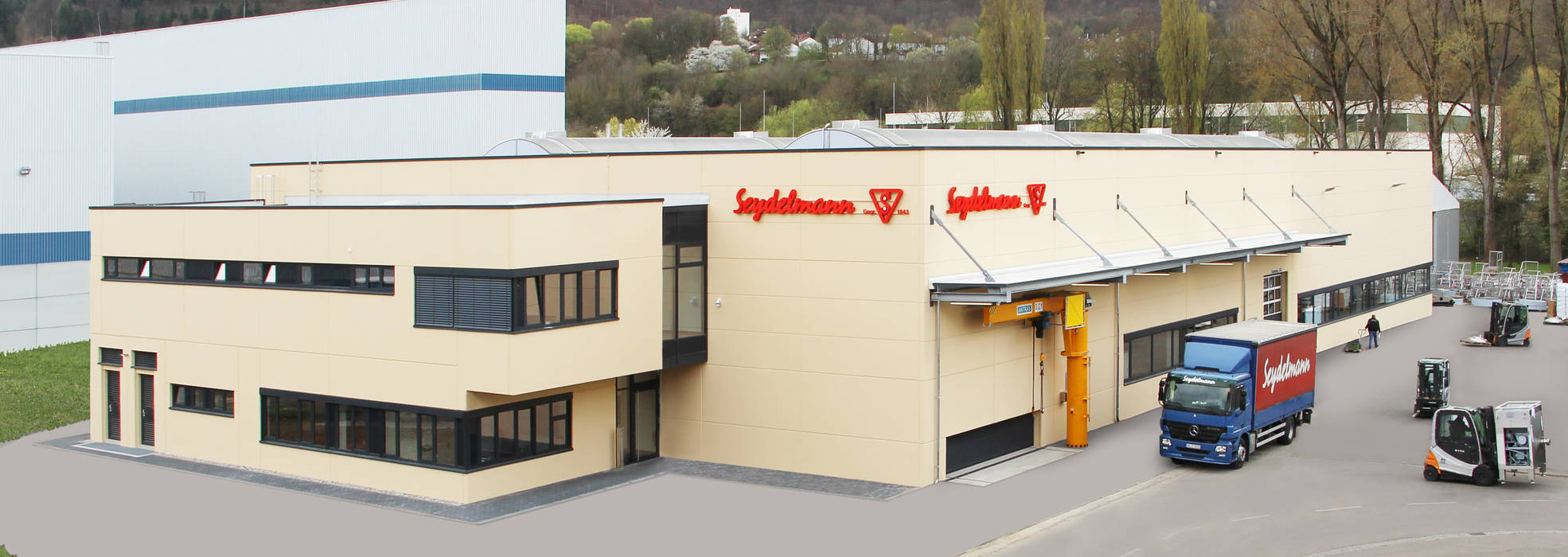
Nose to Tail – Jenzer Butcher Shop and its uncompromising approach to meat
Where no cut goes to waste
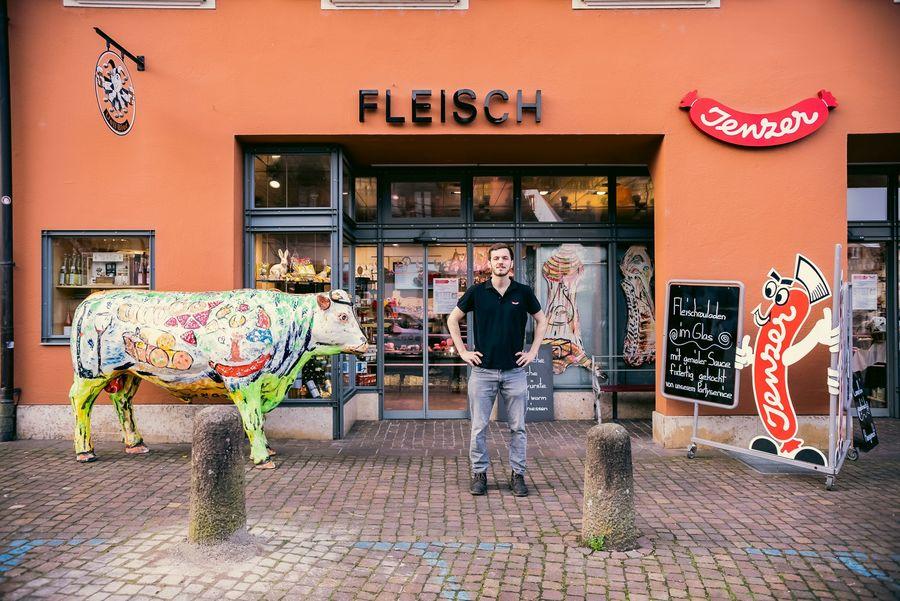
Anyone who steps into Jenzer Butcher Shop in Arlesheim quickly realizes, things are done differently here. Instead of a matter-of-fact routine, there’s something special, refined, and almost rebellious in the air. Behind the counter stands Raffael Jenzer, master butcher, entrepreneur, and innovator. He runs the business as the fifth-generation owner alongside his parents, Barbara and Christoph, and much of what happens here defies convention.
“When my mother, a former vegetarian, joined the business, she asked a lot of questions—including uncomfortable ones. About the origin of our meat and the way the animals are raised,” Jenzer recounts from the family history, explaining who sparked the reflection and ultimately the shift in thinking.
As early as the mid-1990s, he began transitioning the entire product range to meat from species-appropriate, regional livestock farming—a decision that hardly anyone understood at the time. Today, it is taken for granted.
“Today, we’re trying to avoid food waste with the ‘Waste!?’ concept. The word provokes and makes you think,” says Jenzer with a smile. Pork fat becomes crackling lard; beef fat yields Belgian fries; and meat from laying hens is turned into meat pies, terrines, chicken sticks, or currywurst. The goal is to show respect for the slaughtered animals and to communicate this to customers who appreciate it.
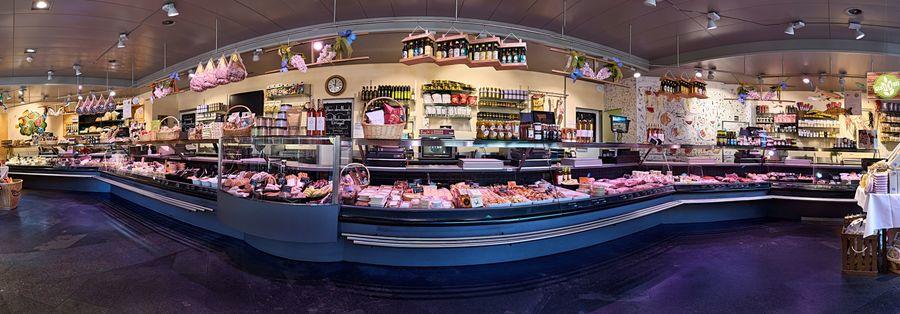
The retail store is now much more than just a butcher’s counter. In addition to high-quality food and beverages—from the region—there is also a seasonal assortment of additional items. “Why should we only offer ham during asparagus season and not also offer the asparagus and homemade mayonnaise from our in-house restaurant to go with it? That saves our customers extra trips and brings us revenue,” explains Raffael Jenzer.
Focus on quality
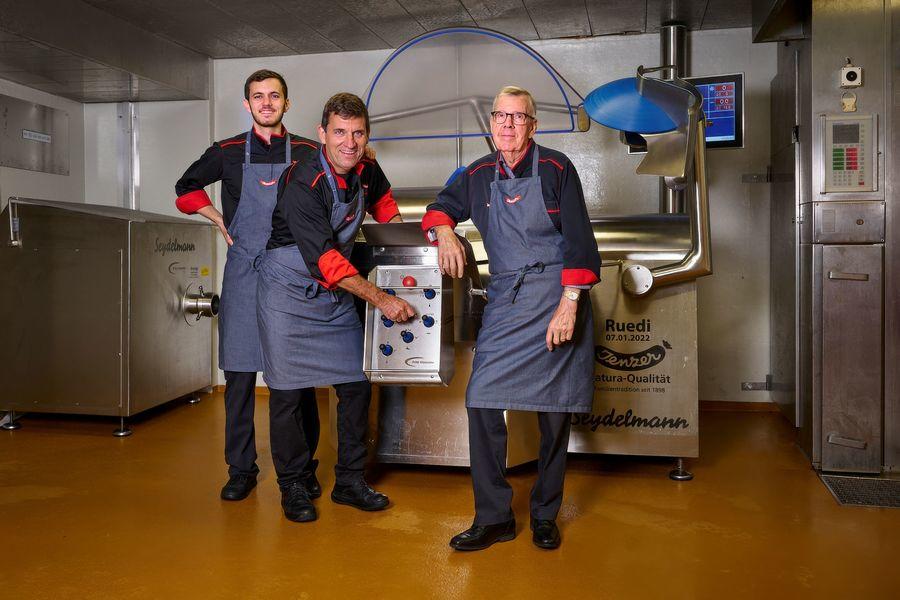
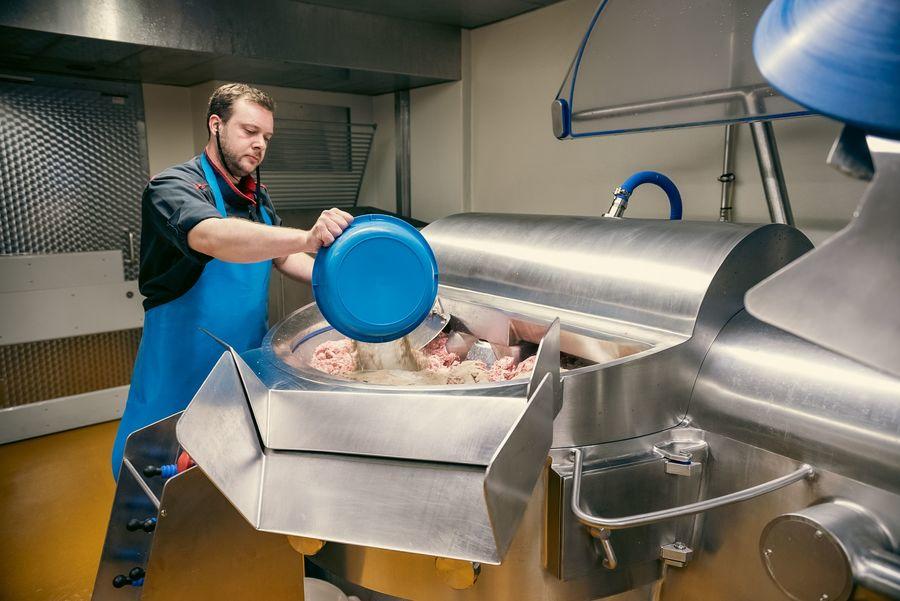
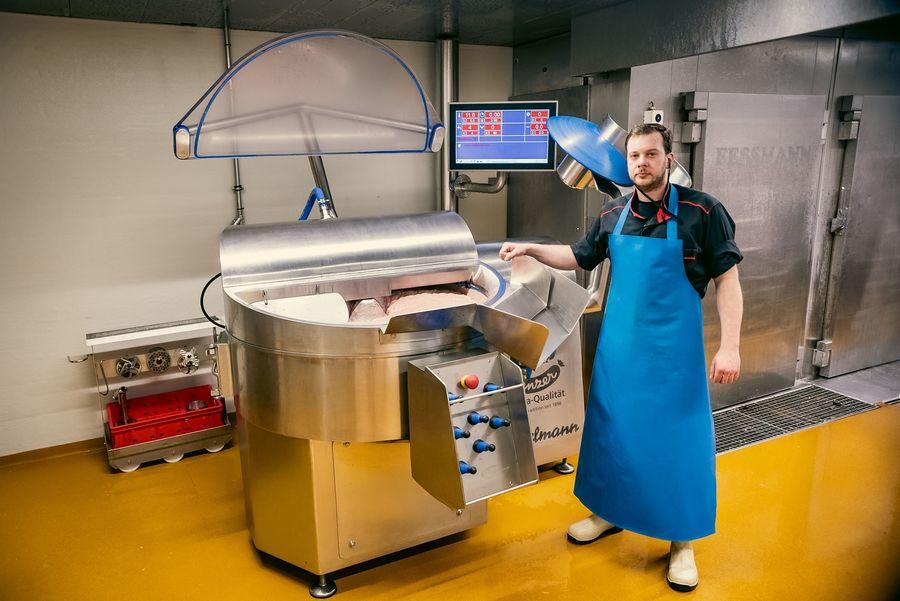
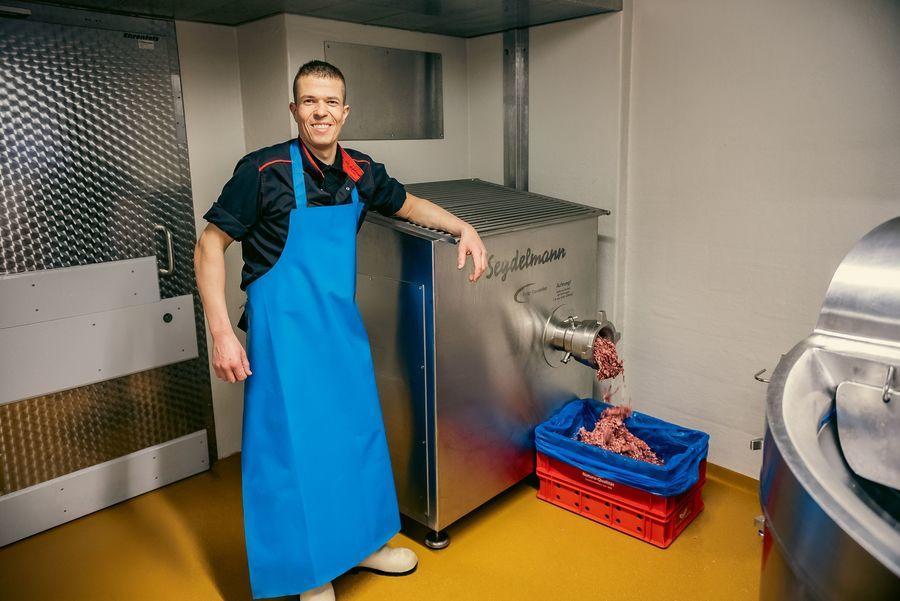
The production facilities and machinery are also fully geared toward maximizing material yield. The backbone of the operation consists of a high-performance vacuum cutter K 124 H and an automatic grinder AE 130 with a cutting set from Seydelmann. “We offer the highest quality, and we work with the highest quality. The two go hand in hand,” explains Jenzer.
The decision to choose Seydelmann machines was a very deliberate one. The family thoroughly researched various brands. “Originally, the family had another manufacturer in mind,” recalls Steffen Kromer, sales manager at Seydelmann. “That’s right,” confirms Raffael Jenzer, “but the longer we talked, the more I realized that this was the right choice for us.” In the end, several aspects were convincing, including the very compact design with the separate control cabinet (now installed in the underground garage), as the sausage kitchen in the historic building does not offer much space. Another very important criterion was the well-thought-out hygienic design. Thanks to the wide-opening main cover and the slim knife shaft arm, all areas are easily accessible and quick and simple to clean. The ergonomic and intuitively simple operation via cross-lever switches and the modern control system—which offers us many features such as traceability, recipe control, and, with an eye toward the future, integration with inventory management—also carried significant weight. “The icing on the cake for us was also the unusually long spare parts warranty and the availability of service. Because even though the machines are essentially built to last forever—things can always happen. We also really appreciate that a family is behind the company, because that means you have a reliable partner,” Jenzer continues. In addition to the representative responsible for machine service in Switzerland, there is also always access to one of the more than 20 Seydelmann service technicians strategically distributed throughout Germany, whose service vehicles are equipped not only with all necessary tools but also with the most common spare parts.
“…and then to have a Seydelmann employee—himself a butcher and meat technologist—spend two days with us providing training on the machine and producing all our products alongside us…it simply doesn’t get any better than that.”
A family business as a think tank
The main location on Ermitagestrasse in Arlesheim combines a shop, production facility, and restaurant. Those who want to buy meat go to the counter; those who prefer to have it prepared sit down at a table in the “Ochsen” next door. The butcher shop and kitchen are closely intertwined—not just physically. Everything produced in one part of the building finds use in the other.
Sibylle Böhler runs the restaurant, and head chef Dominic Meier champions a cuisine that doesn’t rely solely on prime cuts. From pork knuckle to liver, everything finds a place on the menu—usually in two portion sizes, so nothing is left on the plates. Avoiding food waste wherever possible is more than just a buzzword here.
The next generation is also continuing this ambitious approach. Son Raffael has made the utilization of laying hens a particular priority. Among other things, he developed a pâté made from laying hen meat and chicken liver—now a bestseller. The very high knife speeds and the narrow, fluid-dynamic cutting chamber of the Seydelmann high-performance vacuum cutter, in combination with the bowl geometry, ensure not only short production times and high fineness but also high protein breakdown—an effect that is further enhanced during vacuum cutting.
“We want to show that sustainability doesn’t taste like sacrifice,” says Christoph Jenzer. And indeed it doesn’t: The golden-brown pâté dough, baked with lard, crunches so delicately when cut that you immediately understand the concept behind it.
The “Butcher’s Cut” – a central component
Affectionately known in Switzerland as “Metzgerstückli,” the “Second Cut” or “Butcher’s Cut” is a central component for implementing the “nose-to-tail” philosophy. At Jenzer, however, they go far beyond the familiar steaks. “I could get upset every time people talk about ‘first-cut’ and inferior ‘second-cut’ meat. Ultimately, this is just a market convention, and that’s what needs to change,” explains Raffael Jenzer. He sees butchers, the restaurant industry, and large-scale consumers as primarily responsible for this. “We only have a limited number of fillets available each week, so we provide our customers with detailed advice when it comes to switching to other cuts of meat, which may then require a different preparation method. Most of the time, the lower price helps, but it won’t work without advice and persuasion,” he explains. “Until you’ve tried it yourself, it’s usually hard to imagine that cuts other than veal entrecôte or false fillet—such as the breast—can also make an excellent Vitello Tonnato.” Only the trimmings from trimming and cutting end up in the sausage. “Sausage culture in Switzerland is nowhere near as developed as it is in Germany, for example. So, we don’t need such large quantities of meat for sausage production,” explains Raffael Jenzer. This is where Seydelmann’s unique separating plate comes into its own during mincing, reliably separating tendons, bone fragments, and cartilage, thereby significantly improving the quality of coarser end products in particular—such as raw sausages, ground meat, or coarse bratwurst—and providing a clean cut. In addition, it makes the cutting process easier and enables maximum utilization of raw materials. The grinder itself, an AE 130 automatic grinder, allows for the processing of larger pieces of meat thanks to its conical feed screw and reliably feeds them to the working screw. The low-profile design facilitates loading, and the polished, sloping surfaces make cleaning easier.
The craft that endures
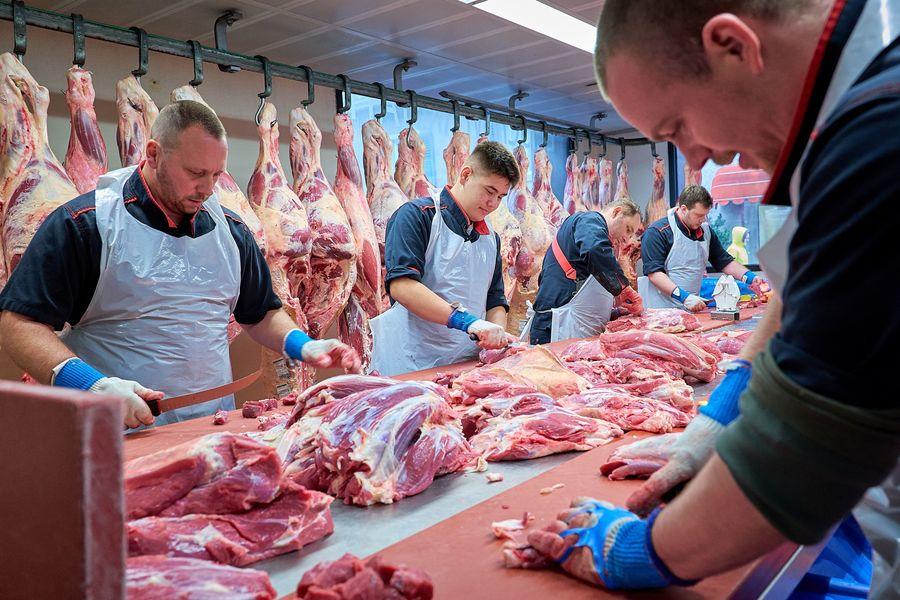
The Jenzer butcher shop employs around 80 people and trains young butchers. The work follows traditional principles—but with modern organization. The meat remains on the bone before being processed. “Cutting while warm is easier, but we give the meat time,” explains Jenzer. It should mature, not just be processed.
Behind the shop lies the so-called meat workshop: a transparent production facility with a viewing window facing the street. Passersby can watch as the meat is cut and seasoned. The message is clear: craftsmanship should be visible.
Crisis as a turning point
When the pandemic caused sales to restaurants to plummet, Jenzer could easily have put the business on short-time work. But he did the opposite. Within two days, he set up a home delivery service, digitized the ordering process, and developed new products. No one was laid off, and no government aid was sought. Instead of stagnation, there was movement.
“We wanted to prove that craftsmanship can work even in a crisis,” he says in retrospect. The strategy paid off: The business emerged from the pandemic stronger than when it went in. In particular, orders from bulk buyers—such as restaurants, hospitals, and nursing homes—now come almost exclusively online via the HOGASHOP. Jenzer delivers around 100 orders daily within a 20-kilometer radius.
Metzgerhuus Füllinsdorf – An alternative to the meat industry
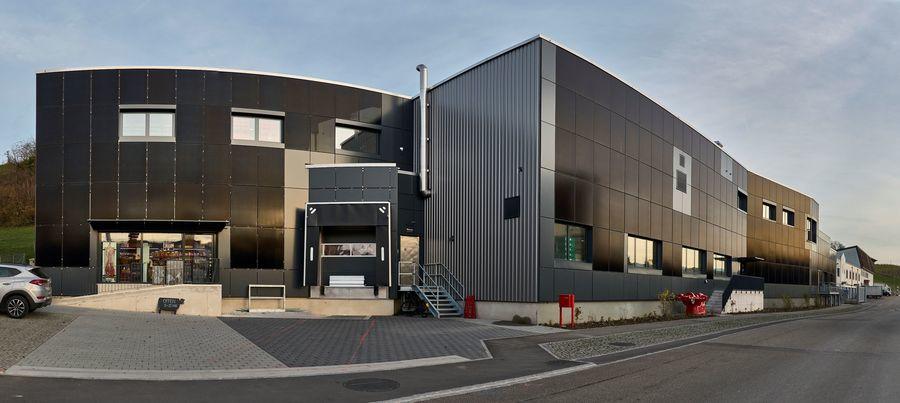
In the summer of 2025, the family’s biggest dream became a reality: the Metzgerhuus in Füllinsdorf, a new regional slaughterhouse—small, transparent, and animal-friendly. Together with four other butcher families, Raffael Jenzer brought the 12-million-franc project to life. The concrete ramp for livestock transport was built to slope upward so that the animals walk “uphill”—following their natural instinct. “We take our time,” says Raffael Jenzer. “One animal every 15 minutes—that’s our rhythm.” The slaughterhouse has a large window for customers and offers many events and educational sessions on the topic of conscious and high-quality meat consumption. Because the participating farms are convinced that only if we treat the animals with respect on the farm, during transport, and at slaughter will customers stay loyal in the long term.
The attached Regio-Shop 365 is open daily and sells meat from its own production—“born, processed, and eaten in the Basel region.” The philosophy: less meat, but better meat. “We assume that in the future, people will eat only half as much meat,” says Jenzer. “Then at least it should be good.”
Less is more
The philosophy that runs through every aspect of the business is: quality over quantity. Raffael Jenzer is convinced that people will eat less meat in the future—but more mindfully. “If you’re only eating half as much, it has to be twice as good,” he says.
This attitude is reflected in everything the family does, from animal welfare and short transport routes to product design. It’s about responsibility and appreciation, about enjoyment without excess.
A business with a conscience
Today, the Jenzer butcher shop is considered a pioneer in sustainable meat processing in Switzerland. It combines tradition with innovation, craftsmanship with a conscience. The name stands for quality—and for a new perspective on what meat can be: not a byproduct or waste product, but a whole.
When Raffael Jenzer walks through his shop in the evening, he sometimes pauses for a moment. Between the shelves of pâtés, sausages, and jars of lard lies the essence of a family business that continually reimagines what many have long since abandoned.
“Meat,” he says, “is not the problem. It’s the way we handle it.”